Gas Stove & LPG Reality: What Indian Kitchens Don’t Talk About Enough
Gas stoves are so deeply woven into Indian kitchens that questioning them almost feels unnecessary. For decades, LPG has been positioned as the safest, cleanest, and most practical cooking fuel for Indian homes. Most families buy a gas stove once, connect it to an LPG cylinder, and assume the setup will remain reliable for years without much thought.
But Indian kitchens in 2025 are not the same as they were even ten years ago. Cooking patterns have changed, fuel prices have changed, kitchen layouts have changed, and safety expectations have changed. Yet gas stoves are still discussed as if nothing around them has evolved. The result is that many households continue using gas out of habit rather than informed choice.
This article looks at the real, everyday reality of gas stoves and LPG in Indian kitchens. Not from an advertisement angle, not from nostalgia, but from how they actually perform under daily Indian cooking conditions. The goal is not to push you toward or away from gas, but to help you understand what you are truly paying for, what risks you may be ignoring, and where gas still makes practical sense today.
How Gas Stove & LPG Reality Fits Into Modern Indian Cooking
LPG works extremely well for certain types of cooking, and this is why it became popular in the first place. Indian food often requires visual control. You adjust the flame by instinct, not by numbers. You simmer dal gently, raise the heat briefly for tadka, then lower it again. Gas allows instant response, and for experienced cooks, this feels natural.
However, modern Indian cooking has quietly expanded beyond traditional patterns. Many households now cook multiple meals a day, reheat food frequently, multitask with appliances, and cook smaller batches more often. This constant on-and-off usage changes how LPG consumption behaves over a month.
What most people don’t realise is that LPG efficiency depends heavily on the stove design, burner size, vessel base quality, and flame calibration. Two households using the same cylinder can experience very different refill timelines. A poorly designed burner wastes heat around the sides of the vessel. A warped pan increases cooking time. Even a slightly clogged burner alters flame quality and fuel efficiency.
In short, LPG itself isn’t inefficient, but the way it is used in many kitchens today often is.As Indian kitchens increasingly mix gas with electric cooking, understanding how induction compares with LPG in real monthly cost and daily usability becomes equally important.
The Hidden Cost of LPG Beyond the Cylinder Price
When people think about LPG cost, they think about the cylinder refill price. But that number alone does not reflect the real monthly expense of gas cooking.
There is the refill itself, which has become increasingly unpredictable in pricing. There are regulator replacements, hose replacements, occasional stove servicing, and safety inspections that most households delay longer than they should. Over time, these small costs add up.
There is also indirect cost. Gas stoves generate significant ambient heat. In Indian summers, this increases kitchen discomfort, especially in small flats. Many people don’t link this to higher electricity bills from fans or exhaust usage, but it is part of the same ecosystem.
Then there is wastage. Unstable flames, oversized burners, and cooking on high heat when medium would suffice burn more LPG than necessary. Most Indian homes unknowingly overuse gas because traditional stoves are not designed for efficiency, but for speed.
So while LPG feels affordable in isolation, its long-term cost picture is more complex than it appears.Many households notice higher electricity bills from exhaust fans or induction usage but rarely compare them with the actual long-term LPG consumption patterns in Indian kitchens.Many Indian households also overlook the quality of the gas stove itself. Burner efficiency, flame control, and safety features vary widely across models, and choosing a poorly built stove often increases gas usage and safety risks.
Gas Stove Safety: Familiarity Has Made Us Careless
One of the biggest misconceptions in Indian kitchens is that gas stoves are inherently safe. In reality, they are safe only when maintained properly and used with awareness. Familiarity often leads to complacency.
Loose regulators, ageing rubber hoses, improperly fitted burners, and blocked ports are common in homes that haven’t serviced their stove in years. Many kitchens rely on smell alone to detect leaks, ignoring the fact that modern LPG leaks can sometimes be subtle, especially in well-ventilated spaces.
Another overlooked issue is flame quality. A yellow or orange flame is often dismissed as “normal,” when it actually indicates incomplete combustion. This not only wastes fuel but also releases carbon monoxide and soot, affecting indoor air quality. Over time, this can have real health implications, especially in kitchens without strong ventilation.
Gas accidents are rare, but when they happen, they are sudden and severe. This makes preventive awareness far more important than reaction.
Even small warning signs like flame colour changes are often ignored in Indian homes, despite clearly indicating combustion inefficiency or safety issues.
Indoor Air Quality and the Gas Stove Conversation No One Has
Indian kitchens are often enclosed spaces. When gas burns, it consumes oxygen and releases combustion byproducts. In older homes with poor ventilation, this leads to subtle but persistent indoor air pollution.
Many people associate air pollution with outdoor traffic or industrial smoke, not with their own kitchen. But daily exposure to gas fumes, especially during long cooking sessions, can irritate the eyes, throat, and lungs. This is more noticeable in households where cooking is done multiple times a day.
This doesn’t mean gas is “toxic,” but it does mean ventilation is not optional. Chimneys, exhaust fans, and open airflow are no longer luxuries. They are essential companions to gas stoves in modern Indian homes.
Why Gas Stoves Still Make Sense for Many Indian Homes
Despite these realities, gas stoves are not obsolete. They still offer unmatched control for traditional cooking styles. They work reliably during power cuts. They support all vessel types. They are easy to repair and widely supported across India.
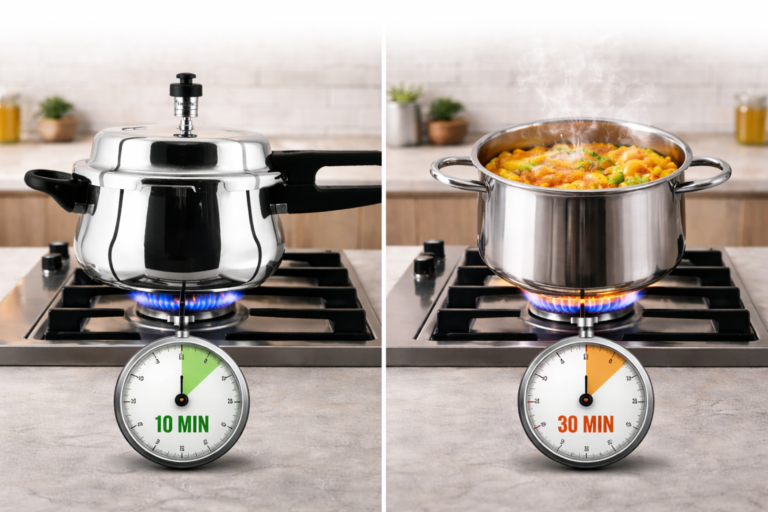
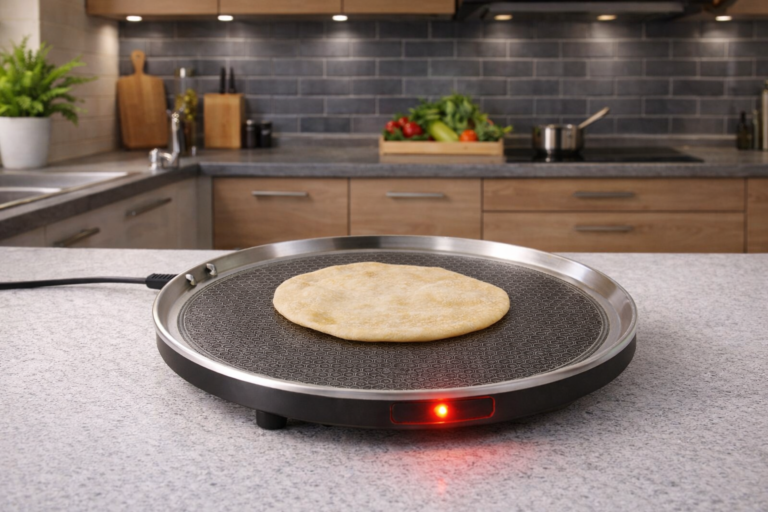
For households that cook heavily with pressure cookers, tawa-based dishes, and deep kadai cooking, gas still feels intuitive. In areas with stable LPG supply and reasonable refill pricing, it remains a practical option.
The key difference today is that gas should be a conscious choice, not an automatic one.
The Future of Gas Stoves in Indian Kitchens
Indian kitchens are moving toward diversification. Many homes now use a combination of gas, induction, and electric appliances. Gas is no longer the single backbone; it is one tool among many.
As LPG prices fluctuate and safety awareness increases, gas stoves will likely evolve toward better burner efficiency, improved flame control, and stricter safety standards. Consumers are also becoming more selective, choosing stoves based on heat distribution, pan compatibility, and long-term durability rather than just number of burners.
Gas is not disappearing, but its role is changing.
LPG Cost Reality in Indian Cities: Why Monthly Spending Feels Unpredictable
One of the most frustrating aspects of LPG usage in Indian cities is the lack of predictability. Unlike electricity, which shows units consumed, LPG consumption is felt only when the cylinder suddenly runs out earlier than expected. This creates a psychological gap where households sense rising costs but cannot easily measure where the extra gas is going.
In reality, LPG consumption is affected by far more than just cooking duration. Burner size, flame spread, vessel diameter, and cooking style all influence how quickly gas is consumed. Many urban households unknowingly cook on higher flames than necessary, assuming faster cooking equals efficiency. In fact, excessive flame often increases heat loss around the sides of cookware, burning more gas without reducing cooking time.
Seasonal cooking habits also matter. During winters, longer cooking sessions and frequent reheating increase LPG usage. During summers, higher ambient temperatures affect regulator pressure and combustion behaviour, subtly altering gas efficiency. These factors rarely appear in buying guides, but they explain why LPG expenses feel inconsistent even when cooking habits seem unchanged.
Understanding LPG cost reality means accepting that the stove is as important as the fuel itself. An inefficient stove silently converts LPG into wasted heat month after month.
Gas Stove Design and Urban Kitchen Constraints
Modern Indian kitchens, especially in apartments, are smaller and more enclosed than older home kitchens. This changes how gas stoves behave in daily use. Heat accumulation becomes a serious issue, especially during long cooking sessions. The stove does not exist in isolation; it affects the entire kitchen environment.
Glass-top gas stoves, while visually appealing, often struggle under continuous high-heat cooking in compact spaces. Heat reflects back onto the glass surface, stressing the material over time. Stainless steel stoves handle heat better, but they also radiate warmth into the surrounding area. In poorly ventilated kitchens, this leads to discomfort and fatigue, especially during summer.
Urban kitchens also rely heavily on chimneys and exhaust systems. A gas stove without proper ventilation increases indoor heat and reduces air quality. Many buyers invest in premium stoves but neglect airflow planning, which reduces both comfort and safety.
The reality is that gas stove performance must be judged within the physical limits of the kitchen. What works well in a spacious, ventilated home may perform poorly in a compact city apartment.
Gas Stove vs Induction: Not a Replacement, but a Behaviour Shift
The conversation around gas versus induction is often framed as a simple replacement decision. In reality, it is more about changing cooking behaviour than switching appliances. Gas encourages instinctive flame control and visual cooking. Induction encourages measured, consistent heat with predefined power levels.
In Indian kitchens, many households are adopting a hybrid approach. Gas is used for high-heat tasks such as pressure cooking, roti making, and tadka. Induction is used for boiling, simmering, reheating, and everyday cooking that benefits from stable heat.
This shift is not driven by technology enthusiasm alone. It is driven by rising LPG costs, safety concerns, and the desire to reduce kitchen heat. Induction reduces ambient heat and eliminates combustion fumes, which is appealing in small flats.
Gas remains relevant, but its role is becoming more focused. Instead of being the default for everything, it is becoming a specialised tool within a mixed cooking setup.
Burner Size, Vessel Matching, and Heat Loss
One of the least discussed factors in gas stove efficiency is vessel matching. Many Indian kitchens use cookware that does not match burner size. Large burners are often used with small vessels, causing flame to extend beyond the base. This wastes gas and increases heat loss.
Conversely, small burners struggle to heat large vessels evenly, leading to longer cooking times and repeated flame adjustments. Over time, this inefficiency adds up to noticeable LPG wastage.
A well-designed gas stove provides burners of different sizes for different cooking needs. But even then, awareness is required. Matching vessel diameter to burner size improves heat transfer, reduces cooking time, and lowers fuel consumption without changing recipes or habits.
This is a small behavioural adjustment with a surprisingly large impact on monthly gas usage.
Ignition Systems and Long-Term Reliability
Auto ignition gas stoves are increasingly popular in Indian cities, but long-term reliability varies widely. Electronic igniters are sensitive to moisture, oil splashes, and heat exposure. In humid kitchens or homes with frequent cooking, igniters often fail after a few years.
Manual ignition, while less convenient, remains more reliable in the long run. Many households end up using lighters even on auto ignition stoves once the igniter weakens. This reality rarely appears in product listings but is common in real kitchens.
When choosing a gas stove, buyers should consider not just convenience at purchase, but reliability over five to seven years. Features that fail early often negate their initial value.
Safety Awareness That Comes Too Late
Most gas stove safety awareness in India is reactive rather than preventive. People pay attention only after smelling gas or hearing about an accident. Regular checks of hoses, regulators, and burner alignment are rare.
Urban kitchens, with their enclosed spaces, amplify the risk. Even minor leaks can accumulate gas quickly if ventilation is poor. This is why modern gas usage demands a more disciplined approach than earlier generations required.
Safety is not about fear; it is about routine awareness. Simple habits like checking flame colour, ensuring proper ventilation, and replacing hoses on time dramatically reduce risk.
The Long-Term Role of Gas in Indian City Kitchens
Gas stoves are unlikely to disappear from Indian kitchens anytime soon. Infrastructure, cooking habits, and cultural familiarity keep LPG relevant. However, its dominance is slowly giving way to a more balanced kitchen ecosystem.
Future Indian kitchens will likely rely on a combination of gas, induction, and specialised appliances. Gas will handle tasks where flame control matters most. Electricity will handle tasks where consistency, safety, and efficiency matter more.
This transition is already happening quietly in urban homes. Understanding gas stove and LPG reality allows households to adapt proactively rather than reactively.
Final Reality Check
Gas stoves and LPG are not outdated, but they are no longer “set and forget” solutions. They demand awareness, maintenance, and honest cost evaluation. Indian kitchens that understand this reality get better cooking results, lower wastage, and safer environments.
If you already use gas, the smartest move is not panic or replacement, but optimisation.Choosing the right cooking setup today is no longer about gas alone. Indian kitchens now rely on a mix of technologies from LPG stoves to induction cooktops and microwave ovens each affecting cost, safety, and daily cooking efficiency in different ways. Use the right vessels, maintain your stove, improve ventilation, and cook with intention rather than habit.
That is the real LPG reality most Indian kitchens were never taught.