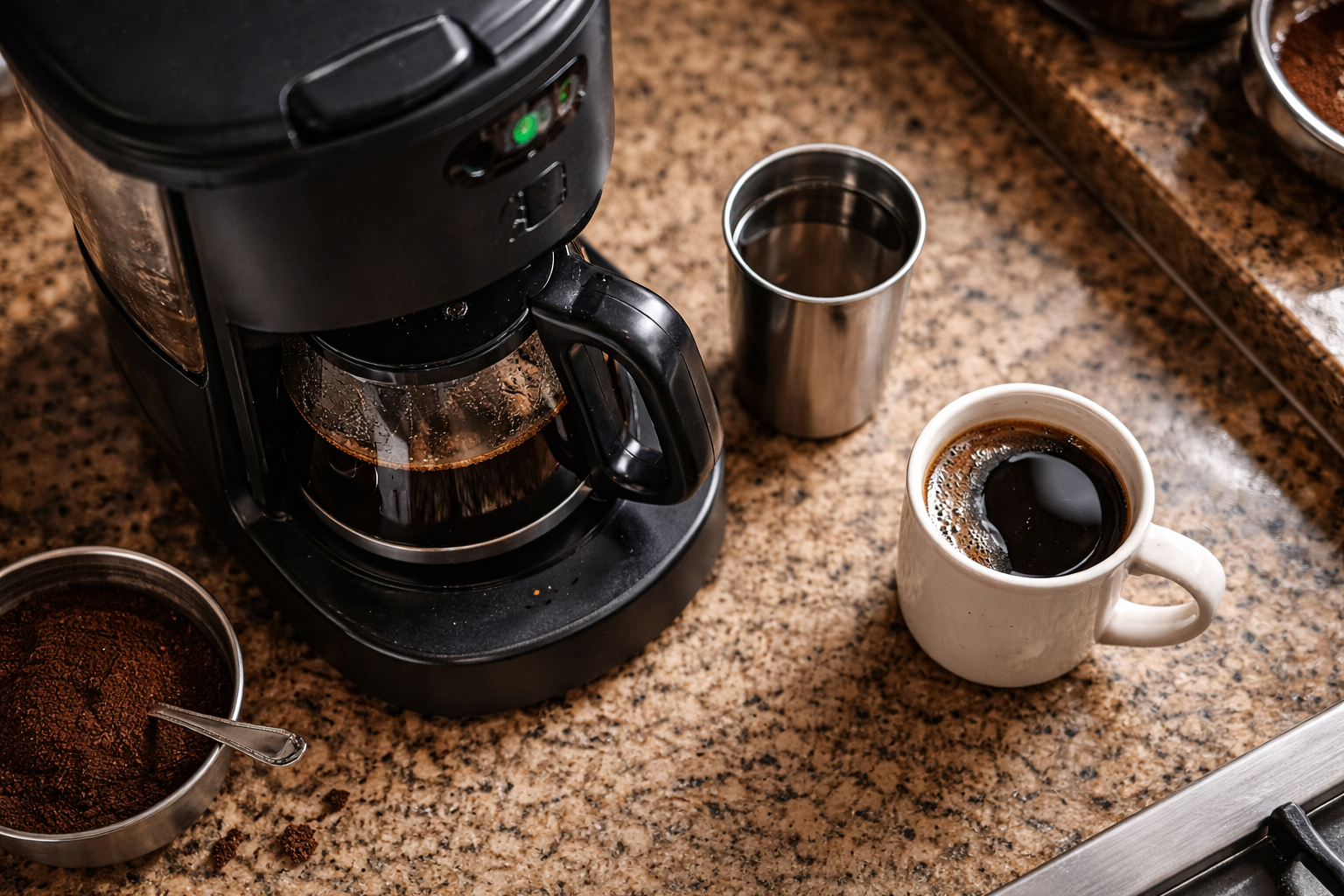
Why Coffee Makers Stop Brewing Properly in Indian Homes (Water, Heat & Usage Reality)
Coffee makers are becoming common in Indian homes, but many users face the same frustration after a few months of use. The machine turns on, heats up, makes noise, yet the coffee output becomes weak, slow, or inconsistent. Sometimes it stops midway. Sometimes the coffee tastes different even though nothing has changed.
At first, people ignore it thinking it is a one-time issue. But slowly the problem becomes regular. One day the coffee is too watery, the next day it feels too bitter. Some days the machine takes longer than usual, and other days it struggles to push water properly. Many users even notice that the coffee is not hot enough even when the machine looks like it is working normally.
This is why coffee maker issues become confusing. The machine still looks “fine” from outside. The buttons work, the power light comes on, and it even makes the usual brewing sound. Yet the final coffee cup quality keeps dropping week by week.
Most people assume the coffee maker has developed a fault. In reality, the problem usually lies in how coffee makers interact with Indian water quality, electricity conditions, and daily usage habits.
In India, these factors are not small. Hard water is common in many cities. Voltage fluctuation happens in many homes, especially during morning and evening peak hours. Many families also use coffee makers differently than they are designed for, such as reheating milk repeatedly or running multiple cycles back to back. Over time, these conditions slowly damage internal parts and reduce performance.
Coffee machines sold in India are often designed for environments with stable voltage, soft water, and specific brewing routines. Indian kitchens rarely meet those assumptions. This gap between design expectation and real household conditions is why coffee makers stop performing properly long before their expected lifespan.
Many coffee makers are made for European or US markets where the water quality is controlled and voltage stability is higher. In those countries, scaling happens slowly and cleaning routines are simpler. But in Indian homes, water can contain heavy mineral content, and the machine may face daily heat stress and inconsistent power supply. Even the humidity and kitchen oil vapour can impact internal components over time.
So the issue is not that Indian users are doing something “wrong.” The issue is that Indian conditions are tougher than what most machines are built for. That is why a coffee maker that works perfectly in the first few months starts acting strangely later.
This article explains what actually goes wrong inside a coffee maker in Indian homes, why the problems appear gradually, and how understanding these factors prevents unnecessary repairs or replacements.
Instead of immediately blaming the machine or wasting money on servicing, it is better to understand the root cause. Many performance problems can be fixed early with small changes, like using better water, adjusting cleaning habits, or avoiding unnecessary heating cycles. When users understand the real reason behind the decline, they can make the machine last much longer and maintain consistent coffee taste.
Why Coffee Makers Behave Differently in Indian Kitchens
Coffee makers rely on precise temperature control, consistent water flow, and controlled brewing time. Indian kitchens introduce variables that disturb this balance.
Unlike basic appliances, coffee machines work like a system where every part must cooperate properly. Water needs to flow at the right pressure. The heating element needs to maintain the correct temperature. The filter basket must allow proper extraction. If one part becomes slightly weaker, the final output quality immediately drops. That is why coffee makers react faster to environmental problems compared to other kitchen appliances.
Water hardness varies widely across regions. Voltage fluctuation is common, especially during morning peak hours. Milk-based brewing habits and frequent reheating cycles add stress that many machines are not optimised for.
In many Indian households, the coffee maker is used heavily in a short time window. For example, early morning tea and coffee rush is common. Multiple family members may use the machine one after another. Sometimes the machine is forced to run without rest. This increases heat pressure and also causes internal moisture buildup, which reduces efficiency.
Also, many users do not realise that coffee makers are not designed for the same “heavy-duty Indian kitchen style” as gas stoves or pressure cookers. They require controlled usage and stable conditions to maintain long-term performance.
These factors don’t cause immediate failure. Instead, they slowly reduce brewing efficiency, leading to weak coffee, irregular flow, and heating issues that users mistake for mechanical defects.
That is why coffee makers usually don’t break suddenly. They decline slowly. The performance drop happens so gradually that users often do not notice it in the beginning. Only when the coffee becomes noticeably weak or when the brewing time becomes too long do people realise something is wrong. By that time, scaling and internal buildup may already be significant.
How Indian Water Quality Slowly Damages Coffee Makers
Water quality is the biggest silent factor affecting coffee maker performance in India. In many regions, water contains high levels of calcium, magnesium, and dissolved minerals. When this water is heated repeatedly inside a coffee maker, minerals settle on internal heating elements and narrow water channels.
This mineral layer is not visible from outside, but it becomes thicker over time. It forms inside pipes, around heating coils, and inside the small openings where water must pass through. Even a small deposit can reduce flow speed. And because coffee machines work with very narrow internal tubes, even minor scaling can disturb the brewing system.
This is the main reason why people in cities like Delhi, Jaipur, Pune, Indore, Lucknow, Hyderabad, or many parts of Gujarat often experience faster coffee machine problems compared to places with naturally softer water.
This process, known as scaling, does not stop the machine immediately. Instead, it reduces water flow gradually. The machine still turns on, still heats, but the amount of water passing through the coffee grounds decreases. This is why coffee becomes weaker over time even though the machine appears to function normally.
Many users think the coffee powder is the problem. They increase the quantity, change the grind size, or switch to a different brand. But the actual issue is that the machine is not pushing enough hot water through the coffee bed. So extraction becomes incomplete. That results in weak flavour, watery taste, and inconsistent strength.
Unlike kettles, coffee makers have thin internal pipes that are difficult to clean completely. Once scale builds up, simple rinsing does not remove it. This is why coffee makers in hard water Indian homes lose efficiency faster than expected.
A kettle can be cleaned easily because the scale is visible and reachable. But in coffee machines, the scaling is hidden inside internal channels. Even if you clean the outer tank, the main damage happens deep inside the system. This is why many users feel shocked when the service technician opens the machine and shows heavy deposits inside.
Why Coffee Makers Heat but Fail to Brew Properly
Many users report a confusing issue: the coffee maker heats up, makes its usual sound, but little or no coffee comes out. This usually points to partial blockage rather than complete failure.
This is one of the most common symptoms of internal scaling. The heating element is working, but water is not moving smoothly through the system. In some cases, the water flow becomes so restricted that the machine starts heating water but cannot push it forward fast enough.
Sometimes the coffee starts coming out in drops. Sometimes it comes out very slowly like a thin stream. Sometimes the machine stops midway because pressure builds inside and the safety mechanism triggers.
When mineral deposits or fine coffee particles restrict water movement, pressure builds internally. The heating element still works, but water cannot move freely through the system. As a result, brewing becomes slow, uneven, or stops midway.
This internal resistance forces the pump to work harder. That extra load creates unusual sounds, stronger vibration, and sometimes even overheating. Over time, the pump may actually weaken, not because it was defective, but because it was forced to operate under high resistance for months.
This situation is often mistaken for a pump problem. In reality, the pump is working harder than before but cannot overcome internal resistance caused by scaling and residue buildup.
That is why many people replace the pump unnecessarily. In reality, cleaning the internal water path and improving water quality can restore performance. But if scaling continues, even a new pump will suffer the same issue again after a few months.
Voltage Fluctuation and Its Impact on Coffee Maker Heating
Coffee makers rely on stable voltage to maintain consistent brewing temperature. In Indian homes, voltage fluctuation is common, especially during morning hours when multiple appliances operate simultaneously.
In many areas, voltage drops when people use geysers, washing machines, or induction stoves at the same time. Even running a fridge and microwave together can create sudden load changes. Coffee machines are sensitive because they need consistent heating power to reach a specific temperature.
Low voltage reduces heating efficiency, forcing the machine to take longer to reach brewing temperature. High voltage creates excess heat stress on internal components. Both conditions shorten the lifespan of heating elements and temperature sensors.
Low voltage can also cause weak coffee because the water may not heat fully. The machine might still brew, but the extraction happens at a lower temperature, leading to under-extracted coffee. This makes coffee taste sour, flat, or less aromatic.
High voltage, on the other hand, can damage internal circuits slowly. It may not burn the machine instantly, but it weakens components like the thermostat, heating coil, and control board over time.
Because coffee makers operate with precise temperature thresholds, even small voltage changes can alter brewing quality without causing a complete shutdown.
This is why many users get inconsistent coffee results even with the same coffee powder. One day voltage is stable and coffee tastes perfect. Another day voltage is low and coffee tastes weak. People blame the machine, but the real cause is unstable electricity supply.
Why Coffee Quality Changes Even When Beans and Ratios Stay the Same
When brewing performance declines, many users change coffee powder, grind size, or quantity, assuming the issue lies in ingredients. In reality, internal machine conditions often cause extraction inconsistency.
Coffee extraction depends on three things: water temperature, flow speed, and contact time. If any of these changes, taste changes immediately. A coffee maker with scaling may deliver less water, or deliver water unevenly. A coffee maker with heating issues may not reach proper brewing temperature. Even small differences can affect flavour strongly.
Reduced water flow, uneven heating, and partial blockages alter how water passes through coffee grounds. This changes extraction time and flavour balance, even if everything else remains unchanged.
Sometimes coffee becomes too bitter because water stays in contact too long. Sometimes coffee becomes weak because water passes too quickly in certain sections. Sometimes the machine produces coffee that tastes burnt due to overheating. All these problems can happen without any change in coffee beans.
This is why coffee may taste sour one day and bitter the next using the same recipe. The machine, not the user, is responsible.
That is why many people waste money buying expensive beans or trying different brands. But the real issue is inside the machine. Fixing water flow and heating stability often brings back the original taste without changing coffee powder.
Cleaning Methods That Accidentally Damage Coffee Makers
Many users attempt aggressive cleaning once performance drops. Using strong acids, metal brushes, or excessive descaling chemicals can damage seals and internal coatings.
Some users try vinegar in high concentration. Others use lemon acid repeatedly. Some even use harsh bathroom cleaning chemicals by mistake, thinking it will remove scale faster. These methods can damage the machine permanently.
Coffee makers are sensitive to cleaning frequency and chemical concentration. Over-cleaning causes rubber components to harden and micro-cracks to form inside water channels.
Once rubber seals weaken, leakage starts. Once internal coatings get damaged, corrosion risk increases. This is why aggressive cleaning can sometimes create bigger problems than scaling itself.
Proper maintenance requires moderation rather than force. Unfortunately, manufacturer instructions are often too generic to account for Indian water conditions.
Most manuals are written for global markets. They recommend descaling once in 2-3 months or once in 6 months. But in many Indian cities, scaling happens faster. So users either ignore cleaning until performance drops badly, or they over-clean out of panic. Both extremes cause problems.
When Servicing Helps and When It Doesn’t
Servicing helps only when specific issues exist, such as heavy scale buildup, clogged filters, or worn seals. General servicing without addressing water quality or voltage issues offers temporary relief at best.
Many service centers do a basic cleaning, rinse the system, and return the machine. The machine works fine for a few weeks. Then the same problem comes back because the root cause is still present.
In many cases, performance improves briefly after servicing and then declines again within months. This cycle frustrates users and leads to premature replacement, even though the machine itself is still functional.
This is why many people feel coffee machines are “not made for India.” But in reality, the machine can work well if water and voltage are managed properly. Otherwise, servicing becomes a repeated expense.
How to Tell Whether the Problem Is Usage, Environment, or the Machine
Observing how the coffee maker behaves over a few days reveals patterns. Slow water flow, longer heating time, inconsistent brewing, and unusual sounds indicate internal resistance rather than sudden failure.
If the machine takes longer to brew than before, scaling is likely. If coffee output is uneven, blockage or residue buildup is possible. If the coffee is lukewarm, voltage or heating sensor issues may be involved.
If problems worsen during peak electricity hours or after extended milk use, environmental factors are likely involved. Identifying these patterns helps decide whether changes in usage or minor adjustments can restore performance.
For example, if coffee is fine at night but weak in the morning, voltage fluctuation is a big clue. If coffee tastes burnt after making milk-based drinks, it could be milk residue or overheating.
Understanding the pattern saves money. Instead of blindly servicing the machine, you can fix the real cause.
Why Coffee Makers in Indian Homes Age Faster Than Expected
Coffee makers sold in India are often adapted versions of global models. While they function adequately under ideal conditions, Indian kitchens expose them to challenges such as unstable voltage, hard water, and heavier daily use.
Indian usage style is also different. Many people use the machine multiple times a day. Some keep the machine plugged in continuously. Some store it near the stove where oil vapour and heat exposure are high. Some keep it near the sink where moisture affects the electrical components.
These conditions accelerate wear on internal components, reducing effective lifespan even when external appearance remains unchanged. Understanding this reality prevents unrealistic expectations.
A machine may look new from outside, but internally the heating element may be coated with scale, sensors may be weakened, and internal pipes may have residue buildup.
Making Coffee Makers Work Better in Indian Conditions
Using filtered or softened water significantly reduces scaling. Avoiding unnecessary reheating cycles limits heat stress. Cleaning milk-contact areas immediately prevents residue buildup.
Many users underestimate how much difference filtered water makes. Even simple RO water mixed with normal water can reduce mineral load. If you have very hard water, using filtered water is one of the best long-term habits.
Allowing the machine to rest between brewing cycles and operating it during stable voltage periods also improves consistency. These small adjustments align usage more closely with machine design limits.
If possible, using a voltage stabilizer or surge protector can protect the machine from sudden fluctuations. It may feel like an extra cost, but it often saves expensive repair later.
Understanding Coffee Maker Performance as a System Issue
Coffee makers do not fail suddenly in most Indian homes. Performance declines because water quality, electricity conditions, usage habits, and maintenance practices interact over time.
This is why coffee maker problems are rarely caused by only one thing. Most of the time it is a combination. Hard water slowly blocks flow. Voltage fluctuation weakens heating stability. Milk residue adds clogging. And inconsistent cleaning makes the situation worse.
When these factors are understood and managed together, coffee makers deliver more consistent results and last longer. Viewing the machine as part of a larger kitchen system rather than a standalone appliance leads to better decisions and fewer unnecessary repairs or replacements.
Instead of assuming “my coffee maker is defective,” it is better to treat it like a precision appliance that needs the right environment. Once you do that, even a basic coffee maker can perform well for years in Indian homes.