Aluminium vs Steel Pressure Cookers Over Time: What Really Changes in Indian Homes
In almost every Indian kitchen, the pressure cooker is used daily. Morning dal, afternoon rice, evening sabzi, weekend chole or rajma. It works quietly every day without anyone noticing.
Most people buy a pressure cooker thinking it will last forever. Some families still use a cooker bought 15 or 20 years ago. But many people who buy new cookers today feel something is off after a few years. Cooking takes longer. Whistles sound different. Food burns easily. The base does not sit straight on the stove.
That’s when the question comes up.
Should I buy aluminium or steel?
Why did old aluminium cookers last longer?
Is steel really better for long use?
The truth is, both aluminium and steel cookers change over time. They behave differently as years pass, especially in Indian kitchens. This article explains that difference in a simple way, without sales talk or fear.
How Pressure Cookers Are Really Used in Homes
Let me tell you something very honestly.
A pressure cooker in our house is not some delicate utensil that we handle carefully. It works the hardest in the kitchen.
Almost every day it is on the stove. Dal in the morning, rice when we are already late, sabzi in the evening, and heavy things like rajma, chole or mutton on weekends. Half the time the flame stays high because we are busy with ten other things. Sometimes we forget to add enough water. Sometimes the cooker runs dry and we realise only after the whistle sounds strange. And many times, without thinking, we wash the hot cooker directly under the tap.
And yes, at least once in its life, every cooker has slipped and hit the sink or the stove.
Nobody does this on purpose. This is just how real kitchens work.
After a few years of this kind of use, you start noticing small changes. The bottom is not as flat as before. The lid does not sit as smoothly. The cooker still works, but it does not feel the same.
This is exactly where the difference between aluminium and steel starts to show.
Earlier, most of us grew up with aluminium cookers at home. They were light, cheap, and cooked fast on gas. Many of those old cookers lasted for years because cooking was slower and flames were usually low.
Now cooking is faster, flames are higher, food is thicker, and many homes use induction. Because of this, the material of the pressure cooker matters much more today than it did earlier.
That is why many people say, “The old cooker lasted 15 years, but this new one already feels weak.”
Why this happens (simple explanation)
Pressure cookers do not suddenly fail. They slowly change because of daily use.
Three things affect them the most:
• Heat
• Type of food we cook
• How we handle and clean them
Indian cooking puts heavy pressure on cookers. We cook thick dals, dry sabzi, sometimes forget to add enough water, use high flame in a hurry, and wash the cooker right after cooking.
Now let’s see how aluminium and steel react to all this over the years.
Aluminium cookers over time
Aluminium heats very fast. That is why old aluminium cookers cooked dal quickly, even on low gas.
But aluminium is a soft metal.
With regular use:
• The bottom slowly becomes thin
• The cooker shape may change a little
• Inside scratches appear easily
• The surface turns dark and dull
Many people keep using it because it still whistles. But inside, cooking quality slowly reduces.
Steel cookers over time
Steel is stronger and harder.
Over time:
• The base stays flat longer
• The cooker keeps its shape
• Scratches are fewer
• It still looks solid after years
Steel heats slower, but it stays stable for a long time.
So the real difference is not which cooks faster. The real difference is how the cooker behaves after years of daily use.
Aluminium vs Steel Pressure Cookers (simple comparison)
| Point | Aluminium Cooker | Steel Cooker |
| Heating speed | Very fast at first | Slightly slower |
| Change over time | Gets thinner, may bend | Stays strong longer |
| Inside surface | Scratches easily | Harder surface |
| Weight | Light, easy to lift | Heavier |
| Care needed | Needs careful use | More forgiving |
| Life span | Shorter if used roughly | Longer with normal care |
| Cooking result | Changes with age | Remains steady |
Is it dangerous or safe
This is where many people worry. Let’s be very clear and simple.
Aluminium cookers: safe or not?
Aluminium cookers sold in India are made for cooking. When new, they are safe.
Problems start when:
• The inside becomes very rough
• The base becomes too thin
• Food starts sticking and burning often
Excess burning, heavy scrubbing, and years of use slowly damage the surface.
Used normally, aluminium cookers are safe. But when they become old and worn out, they become unreliable. Not suddenly dangerous, but not trustworthy either.
Steel cookers: safe or not?
Steel cookers are considered safer for long-term use because:
Steel does not react easily with food
The surface remains stable
The cooker keeps its shape
Still, safety depends on:
• Gasket condition
• Weight and vent working properly
• Lid locking correctly
Steel is safer over time, but only if basic maintenance is done.
Clear answer:
Both aluminium and steel cookers are safe if used properly. Steel stays dependable for a longer time.
What to do at home (practical steps)
Most cooker problems happen because of daily habits, not material.
Simple changes can increase Pressure cooker lifespan.
For aluminium cookers
• Always add enough water
• Avoid very high flame after whistle
• Do not scrub inside with hard scrubbers
• Let cooker cool before washing
• Change gasket once in a year
Gentle use makes aluminium last longer.
For steel cookers
• Use medium flame instead of high
• Clean the bottom regularly
• Make sure cooker sits flat on stove
• Do not overfill food
Steel handles rough use better, but care still helps.
When to stop using or replace
Do not replace a cooker just because it looks old. Replace it when signs appear.
Replace aluminium cooker if:
• Base looks bent or uneven
• Whistle comes very late
• Food burns even with water
• Lid does not seal properly
• Cooker feels too light now
Replace steel cooker if:
• Base no longer sits flat
• Lid locking feels loose
• Pressure release is not smooth
• Deep dents or cracks appear
On average in Indian homes:
• Aluminium cookers last around 5 to 8 years
• Steel cookers last around 8 to 12 years
Actual life depends on usage.
Choosing the Right Pressure Cooker for Long-Term Use
The choice between aluminium and steel is not really about which one is perfect. It is about how long you want safe, stable and trouble-free cooking in your kitchen.
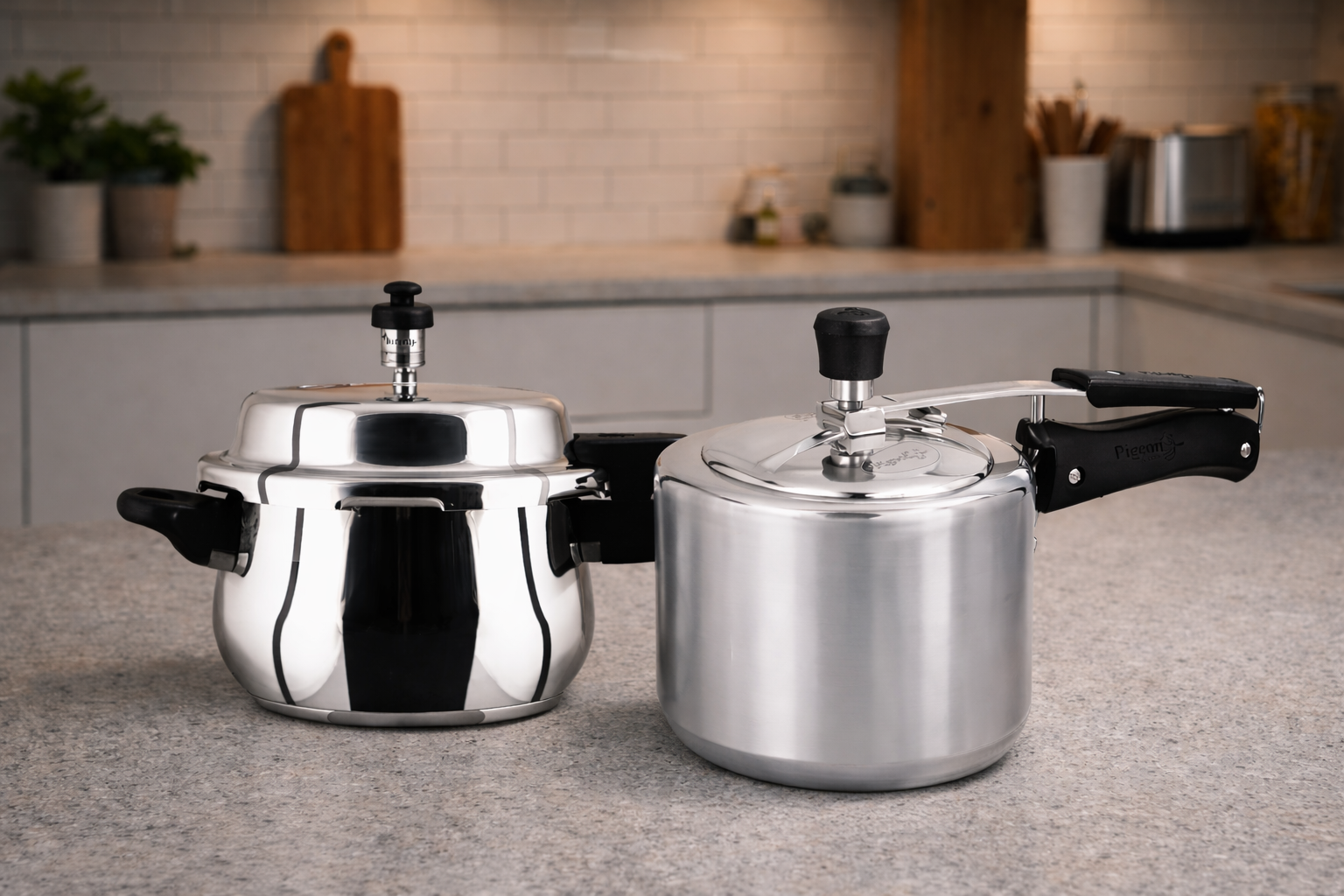
Aluminium pressure cookers feel light in the hand and heat up fast. They cook well and save time, which is why many homes still use them. But as the cooker gets older, it needs more care. Dents, scratches and thin spots can slowly affect performance if handling is rough.
Steel pressure cookers feel heavier and may take a little longer to heat in the beginning. But once they settle in, they remain strong and dependable for many years. They handle daily use better and keep their shape and safety for a long time.
If your kitchen runs every day with heavy cooking, steel usually makes more sense in the long run. If your cooking is light and careful, aluminium can still serve you well without problems.
The real mistake is not about choosing aluminium or steel. The real mistake is ignoring how a pressure cooker changes with time and use. When you understand this, buying and using a pressure cooker becomes much simpler and smarter.