How to Prevent Gas Cylinder Accidents in the Kitchen
In Indian households, LPG cylinders are part of daily life, but they also demand responsible handling. According to official safety advisories from oil marketing companies, most kitchen gas accidents are linked to preventable factors such as damaged hose pipes, improper installation, poor ventilation, or ignoring early warning signs of leakage. In other words, the issue is rarely the cylinder itself, but how it is maintained and used.
Understanding how LPG works is important. The gas is stored under pressure and mixed with a strong odorant so leaks can be detected quickly. When basic precautions are followed, LPG is considered a safe and reliable cooking fuel. Problems usually arise when routine safety checks are skipped or low-quality accessories are used.
This guide focuses on practical, experience-based gas cylinder safety tips at home that every Indian family can apply. From correct placement and leak detection methods to daily usage habits, the goal is simple: reduce risk through awareness and consistent safety practices. Small, informed actions taken regularly can prevent serious kitchen accidents and ensure that your cooking space remains safe for everyone in the household.
Why Gas Cylinder Accidents Happen in Indian Kitchens
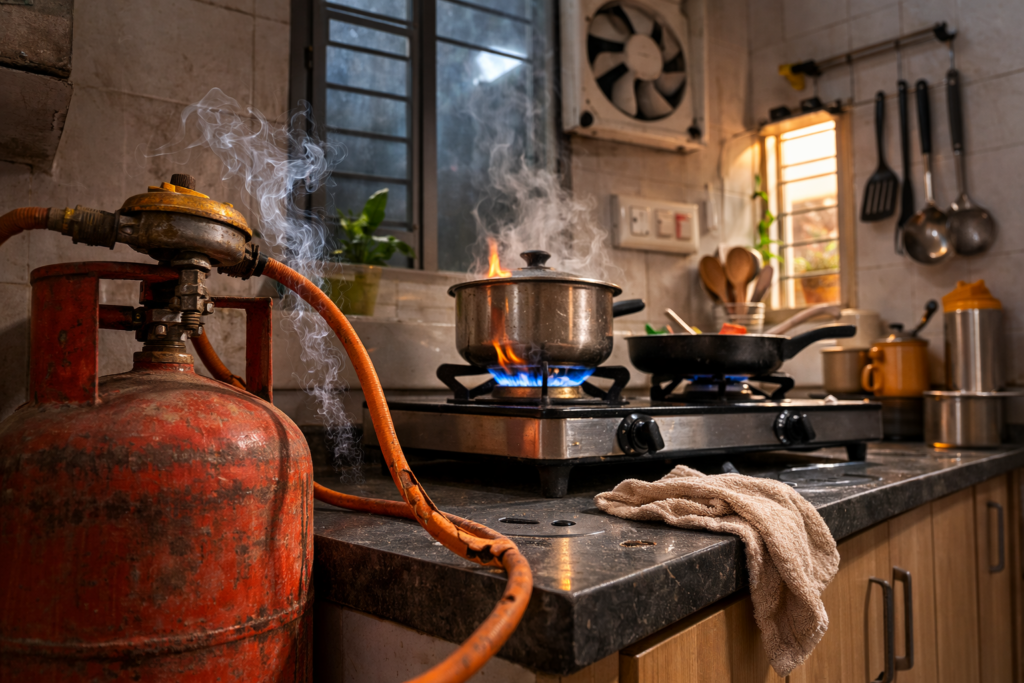
Gas cylinder accidents do not usually happen without a reason. In most situations, there are small warning signs or safety mistakes that go unnoticed. When we look closely at the causes of gas cylinder accidents, the same issues come up again and again: poor ventilation, old hose pipes, regulator faults, and daily carelessness.
Poor ventilation is one of the biggest reasons. If the kitchen does not have proper airflow, leaked gas can collect in one place instead of spreading out. LPG is heavier than air, so it settles near the floor. In a closed kitchen with windows shut and no exhaust fan running, even a minor leak can slowly build up and create danger. Keeping some airflow while cooking is a simple but important step.
Old or damaged hose pipes are another common cause. The rubber pipe that connects the cylinder to the stove does not last forever. Over time, it can become hard, cracked, or loose at the ends. Small cracks may cause slow leaks that are not immediately visible. Many families forget to check or replace the hose for years. Regular inspection and timely replacement can prevent this risk.
Regulator faults also play a role. When a new cylinder is installed, the regulator must be fixed properly. If it is loose or not locked correctly, gas can leak from the connection. A quick soap water test after installation can help detect problems early.
Finally, simple carelessness increases risk. Ignoring the smell of gas, not turning off the regulator after use, or leaving the stove unattended are habits that can lead to accidents. Most gas-related incidents are preventable when basic safety steps are followed regularly.
Early Warning Signs of an LPG Gas Leak at Home
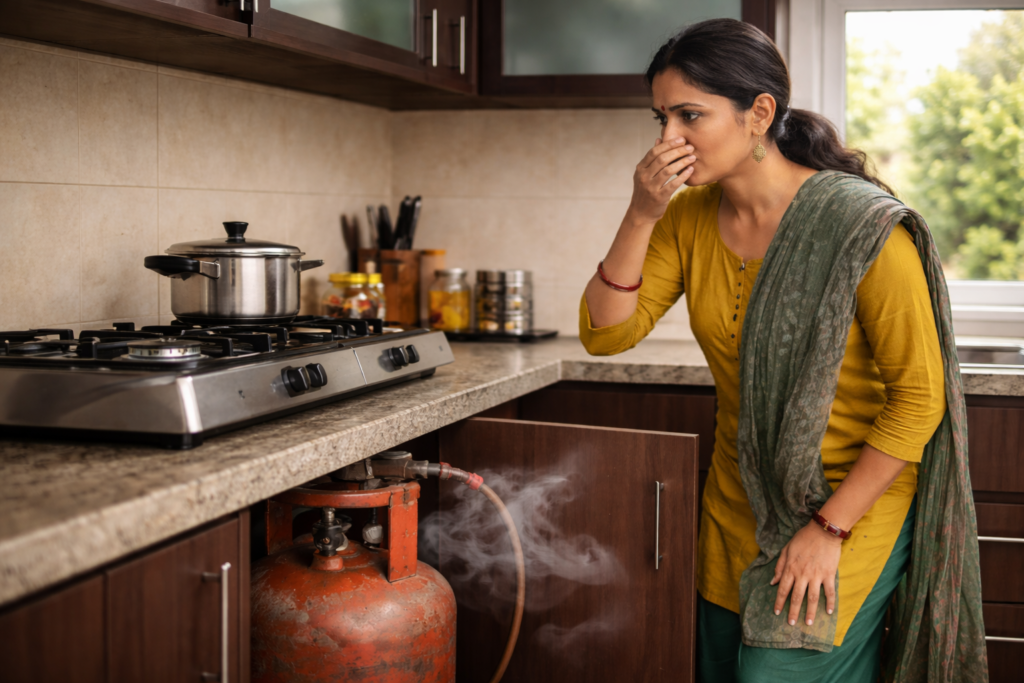
A gas leak rarely happens without giving some kind of signal. The problem is that many people do not recognise those early signs or they ignore them, thinking it is nothing serious. Knowing the early warning signs of an LPG gas leak at home is one of the most important steps in preventing accidents. Small awareness can stop a big problem before it starts.
The first and most common sign is smell. LPG has a strong, unpleasant odour added to it on purpose. This smell is not natural to the gas but is mixed in so that leaks can be detected easily. If you notice a sudden strong gas smell in the kitchen, especially near the cylinder or regulator area, do not ignore it. Even if the smell feels mild, it should still be checked. Many families assume the smell will go away on its own, but that delay can increase risk.
Another warning sign is a hissing sound near the cylinder, hose pipe, or regulator. Gas escaping under pressure can sometimes produce a faint hissing noise. If you hear such a sound, switch off the regulator immediately and avoid creating any spark in the area.
Flame colour can also give clues. A healthy gas flame should be blue. If the flame turns yellow or orange frequently, it may indicate incomplete burning or blockage in the burner. While this does not always mean there is a leak, it signals that the stove needs cleaning or inspection. Ignoring unusual flame behaviour is not a good practice.
Physical condition of the hose pipe is equally important. If the rubber pipe looks cracked, loose, bent sharply, or feels hard and dry, it may be at risk of leakage. Running your hand gently along the pipe during routine cleaning can help you notice damage early. Replacing worn-out pipes on time is part of basic gas cylinder safety tips at home.
Sometimes people feel slight dizziness or headache while cooking in a poorly ventilated kitchen. Although LPG itself is not poisonous, lack of oxygen in a closed space combined with gas accumulation can make breathing uncomfortable. Proper airflow reduces this risk.
If you suspect a leak, the safest way to confirm is the soap water test. Apply soap solution to the connection points and look for bubbles. Never use a matchstick or lighter to check for leaks.
Recognising these early warning signs of an LPG gas leak at home builds real safety awareness. Gas cylinder accidents rarely happen without clues. When families stay alert to smell, sound, flame changes, and equipment condition, most problems can be detected early and handled safely.
How to Check LPG Gas Leak at Home Safely
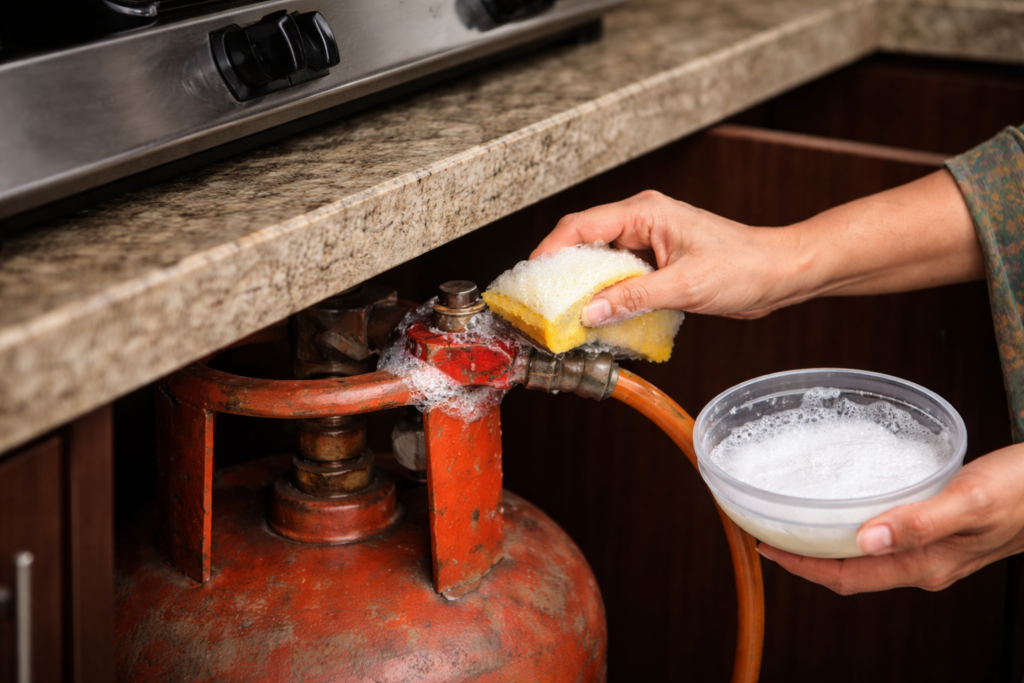
Gas leaks can feel scary, but checking for a possible leak at home is not complicated. What matters most is staying calm and not rushing into risky actions. The first rule is simple: never use a matchstick, lighter, or any flame to test for a leak. That is dangerous and can turn a small issue into a serious accident.
If you suspect something is wrong, start by turning off the regulator on top of the cylinder. This stops the flow of gas immediately. After that, open all doors and windows to allow fresh air to circulate. Good airflow reduces the chance of gas building up in one place.
The safest way to check for a leak is by using a soap water solution. Mix a little dish soap with water in a bowl. Apply this solution gently around the regulator connection and along the hose pipe using a sponge or cloth. Watch carefully. If you see bubbles forming continuously at any point, it usually means gas is escaping from that area. If there are no bubbles, the connection is likely secure.
It is also important to look closely at the rubber hose. Check if it feels hard, cracked, bent sharply, or loose at either end. Run your hand slowly along the pipe while inspecting it. If you notice visible damage or if the pipe slips easily from the connector, it should be replaced.
After checking, do not immediately turn the regulator back on if you are unsure. If you strongly smell gas even after tightening the connection, contact your gas distributor or service technician. Avoid switching electrical appliances on or off during this time, as even a small spark can be risky in the presence of gas.
Making this quick inspection a regular habit, especially after installing a new cylinder, adds an extra layer of safety. It takes only a few minutes but can prevent a dangerous situation. Simple awareness and careful checking are often enough to keep your kitchen safe.
Safe LPG Cylinder Placement in Small Kitchens
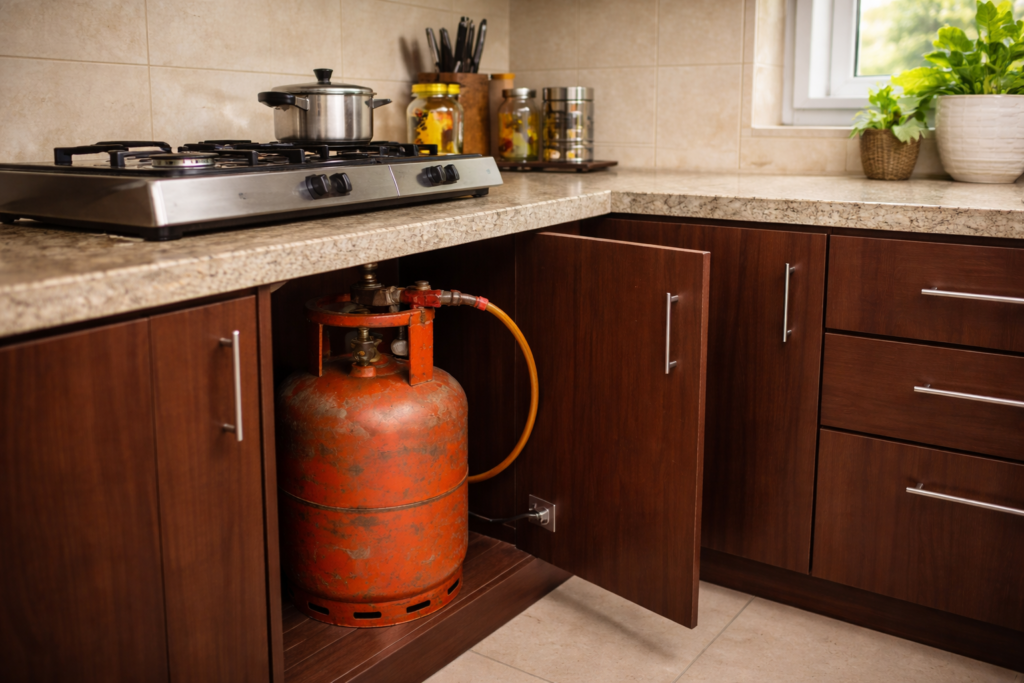
Placing the LPG cylinder correctly in the kitchen may seem like a small detail, but it plays a very important role in safety. Many families focus on the stove and cooking area but do not think much about where the cylinder is kept. The truth is, safe LPG cylinder placement in small kitchens can reduce the risk of leaks, fire, and gas buildup.
The first and most important rule is to keep the cylinder upright at all times. The cylinder is designed to function in a vertical position. Laying it down or tilting it can affect how gas flows and may increase the risk of leakage. It should always stand straight on a flat, stable surface.
In small kitchens, space is often limited. Many people keep the cylinder inside a cabinet below the stove. While this is common, the cabinet should not be fully closed and airtight. Gas needs space to disperse if there is a minor leak. If the cabinet has no ventilation at all, gas can collect inside without anyone noticing. Ideally, there should be some airflow around the cylinder area.
The cylinder should also be placed away from direct heat. It should not be positioned too close to the stove burner, oven, or any electrical appliance that produces heat. High temperatures can increase internal pressure inside the cylinder. Keeping a safe distance between the stove and the cylinder reduces this risk.
Another important point is to keep the cylinder away from electrical switches and plug points. In case of a leak, even a small spark from a switch can ignite accumulated gas. This is why it is recommended to maintain some distance between the cylinder and electrical fittings.
The floor where the cylinder is placed should be dry and level. Avoid placing it in a damp corner or near a sink where water may spill frequently. Moisture can cause rusting over time, weakening the cylinder body. While cylinders are built strong, long-term exposure to water is not advisable.
Ventilation in the kitchen matters a lot. Even in small flats, try to ensure there is at least one window or working exhaust fan. Proper air circulation helps prevent gas buildup. If your kitchen is fully enclosed, keeping the door slightly open while cooking can improve airflow.
The hose pipe should not be stretched tightly across the kitchen. It should connect smoothly without sharp bends. Excessively long pipes lying across the floor can be stepped on or damaged accidentally. Keep the connection neat and secure.
For homes that keep a spare cylinder, it should also be stored upright in a ventilated space. Never store a spare cylinder in direct sunlight or near a heat source.
Safe LPG cylinder placement is not about complicated rules. It is about thoughtful positioning and basic awareness. In small kitchens, where space is limited, careful arrangement becomes even more important. A few simple adjustments in how and where the cylinder is placed can greatly reduce the chances of accidents and keep the kitchen environment safe for everyone.
Gas Hose Pipe Safety and Replacement Timeline
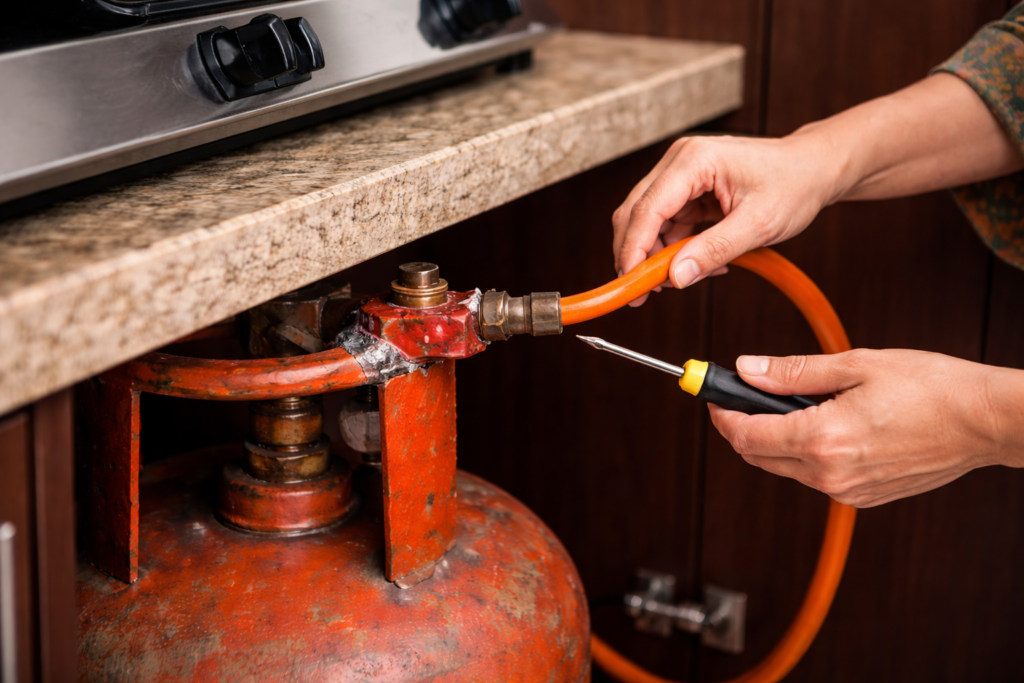
The gas hose pipe may look like a small part of your kitchen setup, but it plays a very important role in overall safety. This rubber pipe connects the LPG cylinder to the stove and carries gas every time you cook. Many families focus on the cylinder and regulator but forget to check the hose. Over time, this small neglect can become risky.
The first thing to understand is that a gas hose pipe does not last forever. Even if it looks fine from a distance, the material slowly weakens with regular use. Heat from the stove, bending, pressure, and general wear can affect its strength. In most homes, the pipe is left unchanged for many years simply because there is no visible problem. But waiting for visible damage is not a safe approach.
A good quality hose pipe should ideally be replaced every one to two years. This may feel frequent, but it is a small cost compared to the risk of leakage. If you cannot remember when the pipe was last changed, that itself is a sign to inspect it carefully. Regular replacement should become part of your basic kitchen maintenance routine.
When checking the hose pipe, look for simple signs. Is the rubber feeling hard instead of flexible? Are there small cracks near the ends? Is the pipe bent sharply behind the stove? Does it feel loose at the connection points? These are warning signs. Even a small crack can cause slow gas leakage that may not be immediately noticeable.
It is also important to use a certified, good quality hose. Cheap local pipes without proper safety markings may not meet required standards. Always choose a hose that is suitable for LPG use and fits tightly on both the regulator and stove inlet. The pipe should not be stretched too tight or left too loose. It should connect comfortably without sharp bends.
Another common mistake is running a very long hose across the kitchen floor. Long pipes increase the chances of accidental pulling, stepping, or damage. Keep the pipe length reasonable and positioned neatly behind the stove.
Cleaning around the pipe area during regular kitchen cleaning helps you notice issues early. Simply wiping around the cylinder and stove area once a week allows you to observe the condition of the hose.
Gas hose pipe safety is not complicated, but it requires attention. Timely replacement, regular inspection, and using proper quality materials can prevent many kitchen accidents. A small rubber pipe may not seem important, but it is one of the most critical parts of your LPG setup. Taking care of it properly adds an extra layer of protection to your home and family.
What to Do Immediately If You Smell Gas
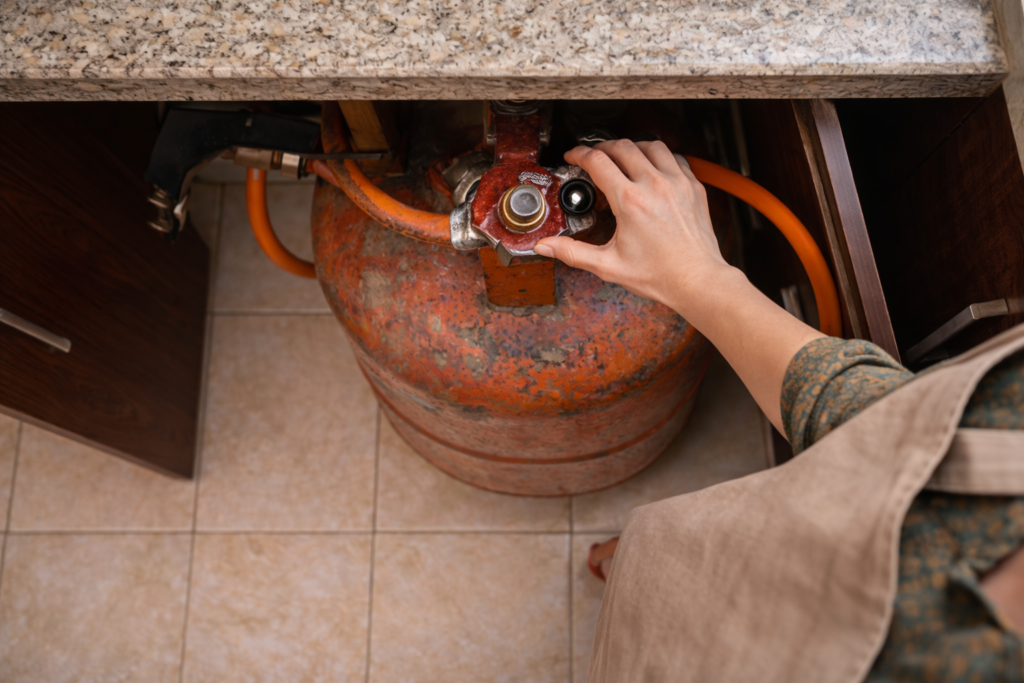
Smelling gas in the kitchen can be unsettling. The strong odor is hard to ignore, and that is actually a good thing. The smell is added to LPG on purpose so that leaks can be detected quickly. If you ever notice this smell inside your home, the most important thing is to stay calm and act carefully. Panic often leads to rushed decisions, and rushed decisions can increase risk.
The very first step is to turn off the regulator on top of the gas cylinder. This stops the flow of gas immediately. If the stove is on, switch off the burner knobs carefully. Do not strike a match or use a lighter under any circumstances. Even if you think the smell is mild, avoid any open flame.
Next, open all doors and windows in the kitchen. Fresh air helps the gas disperse. Since LPG is heavier than air, it settles near the floor. Good ventilation reduces the chance of gas building up in one place. If your kitchen has an exhaust fan, you may use it only if you are sure there is no heavy gas buildup and you can switch it on safely. However, avoid turning on electrical switches if the smell is strong, as even a small spark can ignite gas.
Do not operate any electrical appliances during this time. Avoid switching lights on or off, and do not use the doorbell or mobile phone inside the kitchen area if the smell is intense. Electrical sparks, even tiny ones, can be dangerous in the presence of gas.
Once ventilation is underway, try to identify the source of the smell without touching too many things. Check the regulator connection and the hose pipe visually. If the smell started right after installing a new cylinder, the connection may not be tight enough. You can apply a soap water solution around the regulator and hose joints to check for bubbles. If bubbles appear continuously, there is likely a leak.
If you confirm a leak or if the smell does not reduce after turning off the regulator and ventilating the area, step out of the kitchen and call your gas distributor or emergency service number from a safe place. Do not attempt to fix major issues yourself. Professional technicians are trained to handle these situations safely.
If the smell is very strong and you suspect significant leakage, move family members, especially children and elderly people, away from the kitchen area. Keep the space clear and avoid crowding. Safety comes first.
It is also important not to ignore even a mild gas smell. Some people assume it will disappear on its own. That delay can be risky. Treat every gas smell seriously until you are sure the issue is resolved.
After the situation is handled, take time to understand what caused it. Was the hose pipe old? Was the regulator loose? Did ventilation need improvement? Learning from the incident helps prevent future problems.
Knowing what to do immediately if you smell gas can make a big difference. Quick but careful action reduces risk and protects your home. The key steps are simple: turn off the regulator, avoid flames and electrical switches, increase ventilation, check connections safely, and call professionals if needed. Staying alert and responding calmly is the best way to handle a gas leak situation.
Frequently Asked Questions About LPG Cylinder Safety
1. Is it safe to keep an LPG cylinder inside the kitchen?
Yes, it is safe if the cylinder is placed upright, in a ventilated area, and away from direct heat and electrical switches. The space should not be completely closed without airflow.
2. How often should the gas hose pipe be replaced?
It is better to replace the hose pipe every one to two years. If you notice cracks, stiffness, or loose fittings, replace it immediately.
3. What should I do if I smell gas but cannot find the source?
Turn off the regulator, open doors and windows, and avoid using electrical switches. If the smell continues, contact your gas distributor or a trained technician.
4. Can an LPG cylinder explode on its own?
A properly maintained cylinder does not explode on its own. Most accidents happen due to leakage, poor ventilation, or exposure to fire.
5. Is it necessary to turn off the regulator every night?
Yes, turning off the regulator after cooking or before sleeping is a simple safety habit that reduces risk.
6. How can I check for a gas leak safely at home?
You can apply soap water around the regulator and hose connections. If bubbles form continuously, there may be a leak. Never use a flame to test.
7. Why does my gas flame sometimes turn yellow?
A yellow flame usually means the burner needs cleaning or there is improper air mixing. It does not always mean a leak, but it should be checked.
8. Is it safe to store a spare cylinder at home?
Yes, but it should be stored upright, in a ventilated area, and away from heat and direct sunlight.