Why Does Garlic Turn Green After Cutting? Real Reason and Simple Fixes
If you cook even a little bit, you’ve probably seen this strange kitchen moment , you peel a fresh garlic clove, slice it nicely, and everything looks normal. Then you look away for a few minutes. Maybe you’re washing tomatoes or heating oil. And suddenly, the garlic doesn’t look like garlic anymore.
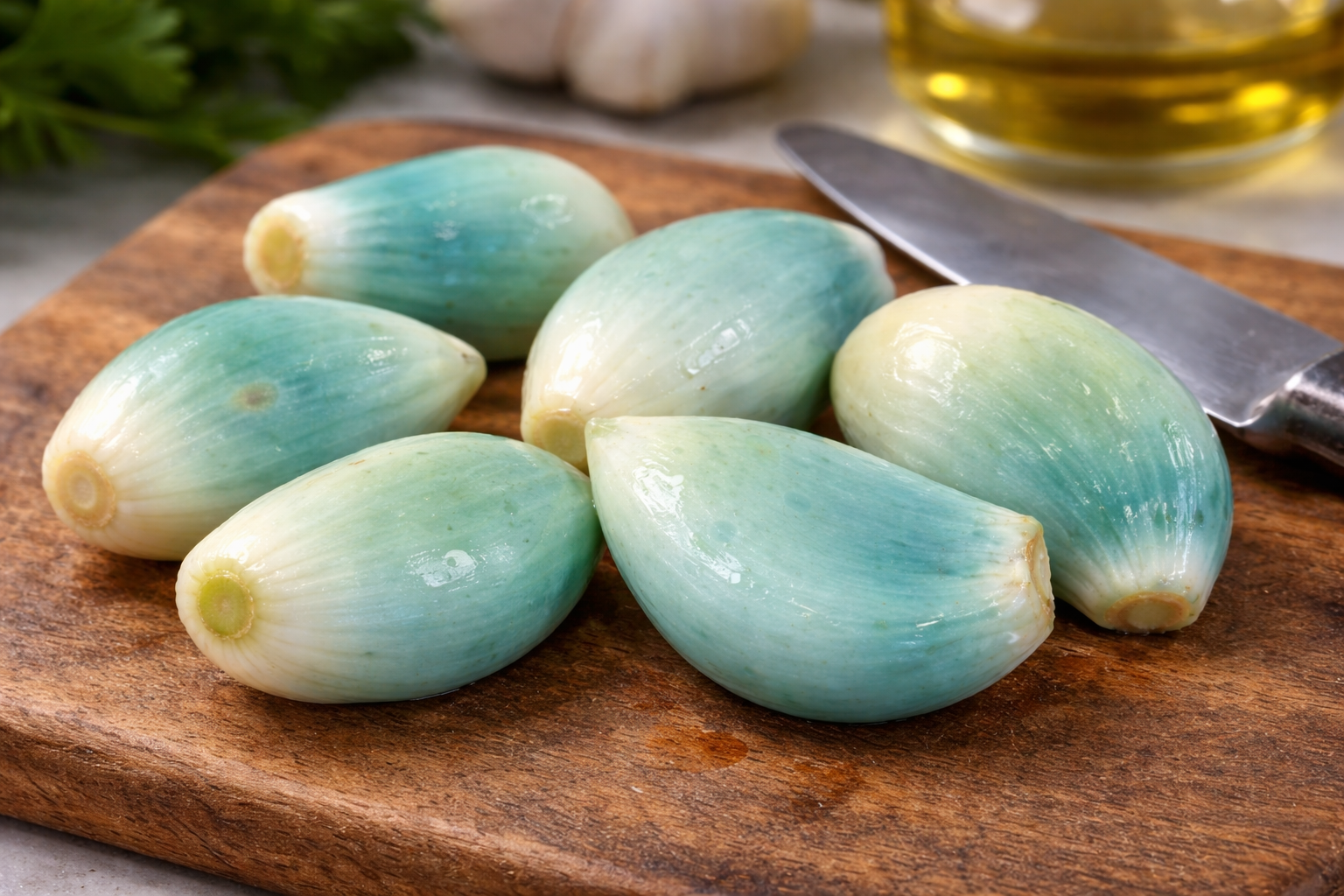
It starts developing a green tint, sometimes even a bluish-green shade that looks almost unnatural. Your first thought is usually panic. Did the garlic go bad? Was it contaminated? Is it safe? And most importantly, should you throw it away before it ruins your food?
If you’ve been searching why does garlic turn green after cutting? you’re asking a very smart question. Because even though this happens in kitchens all over the world, most people never get a clear answer. Some think it’s fungus. Some think it’s chemicals. Some people even assume garlic turning green means it’s poisonous.
But here’s the truth: in most cases, garlic turning green is just science doing its thing. Weird science, yes. But totally normal.
Let’s break it down in the simplest, most practical way, so the next time it happens, you’ll know exactly what to do.
Why Does Garlic Turn Green After Cutting? (Quick Answer)
Garlic turns green after cutting because chopping or crushing damages its cells, which triggers a natural chemical reaction between garlic enzymes and sulfur compounds. This reaction can create green or blue-green pigments, especially when garlic is exposed to air or mixed with acidic ingredients like lemon juice or vinegar.
In most cases, green garlic is safe to eat and does not mean it has spoiled.
The First Time Garlic Turned Green in My Kitchen (A Quick Story)
The first time I saw green garlic, I honestly thought something had gone wrong.
I was making a simple garlic chutney and had crushed a few cloves with salt. Then I squeezed lemon juice into the bowl and left it for a few minutes while I finished something else. When I came back, the garlic paste looked like it had a pale green glow. Not bright neon green, but enough to make me stop and stare.
I remember thinking, “This can’t be normal. Garlic is supposed to be white.”
But after looking into it (and later seeing the same thing happen with pickled garlic), I realized this is a well-known reaction. Even professional chefs see it. It’s just that nobody talks about it until it freaks them out.
So if your garlic turned green today, relax. You’re not alone.
Why Does Garlic Turn Green After Cutting? (What’s Really Happening)
To understand why garlic turns green, you don’t need a chemistry degree. You just need to know one thing: garlic is packed with powerful natural compounds.
Garlic contains:
• sulfur compounds (responsible for that strong garlic smell)
• enzymes
• amino acids
• natural sugars
When garlic is whole, these compounds are safely separated inside the clove. They’re basically stored in different “compartments.” But the moment you slice, chop, or crush garlic, you break the cells open and all those compounds start mixing together.
That’s when the chemical reaction begins.
The Key Enzyme Reaction
Garlic has an enzyme called alliinase. When you cut garlic, alliinase becomes active and reacts with a compound called alliin, creating allicin. Allicin is the compound that gives garlic its sharp flavor and that strong smell.
But allicin doesn’t just sit there. It keeps reacting with other compounds, and under the right conditions, it can form pigments that appear green or blue-green.
So in simple words:
garlic turns green because cutting activates chemical reactions inside the clove.
It’s not magic. It’s not rot. It’s not poison. It’s just garlic chemistry.
Garlic Turning Green in Lemon Juice or Vinegar ? (Why It Happens)
This is one of the most common situations where people notice green garlic.
You chop garlic. You add lemon juice. You wait a few minutes. And suddenly the garlic changes color.
Why does this happen?
Because lemon juice and vinegar are acidic.
Acid creates the perfect environment for garlic’s sulfur compounds and enzymes to produce pigments. It’s similar to how certain fruits darken after cutting because of oxidation, but garlic’s reaction creates green or bluish tones instead of brown.
This is also why garlic in pickles sometimes looks green or even blue.
So if you’ve ever made:
• garlic pickle
• garlic chutney with lemon
• salad dressing with garlic and vinegar
• garlic in tomato-based sauce
…and noticed color changes, it’s because acidity speeds up the reaction.
Why Old Garlic Turns Green Faster ?
Another big factor is garlic age.
Fresh garlic is usually mild and stable. But garlic that has been stored for a long time changes internally. Over time, the balance of amino acids and sugars inside garlic shifts, and this can increase the chance of pigment formation.
So yes, older garlic is more likely to turn green after chopping.
This is why sometimes you chop garlic and it stays white, but other times it turns green even though you used the same recipe. The garlic itself may have been different.
Does Crushing Garlic Make It Turn Green Faster?
If you slice garlic gently, you may not notice much change. But if you crush it into paste, the chances of green garlic increase.
That’s because crushing causes more cell damage. More damage means more enzymes released. More enzymes means stronger chemical reactions.
Garlic paste, garlic press garlic, and mortar-pounded garlic often turn green faster than sliced garlic.
Quick rule:
The more you break garlic, the faster it reacts.
Why Garlic Turns Green in the Fridge Overnight ?
Many people chop garlic and store it in a container in the fridge, thinking it will stay fresh.
But chopped garlic is chemically active. Even after you cut it, the enzymes keep working. Add moisture from the fridge environment and oxygen exposure, and the reaction continues slowly.
That’s why garlic may look normal at night but slightly green by morning.
Why fridge storage triggers it:
• moisture builds up in the container
• oxygen exposure continues
• enzymes keep reacting
• cold slows spoilage but doesn’t stop chemistry
This is also why chopped garlic stored too long starts smelling stronger or slightly unpleasant.
Does Garlic Turn Green While Cooking ?
Sometimes garlic turns green while cooking, especially when frying.
This usually happens in recipes where garlic is exposed to:
• low heat for too long
• acidic ingredients added early
• certain cooking oils combined with spices
• sauces like soy sauce or vinegar-based marinades
In many Asian recipes, garlic is cooked with acidic sauces, and the color change is common.
Also, if you cook garlic too slowly, the compounds may react differently than if you sauté quickly at proper heat.
Does cooking green garlic make it unsafe?
No. If the garlic was safe before cooking, it’s safe after cooking too.
Is Green Garlic Safe to Eat?
This is the big question, and here’s the honest answer:
Yes, green garlic is usually safe to eat.
The green color is normally caused by pigment formation from natural garlic compounds. It is not mold. It is not bacteria. It is not automatically spoilage.
That said, you should still use common sense. Because garlic can spoil too, and spoiled garlic is not safe.
Green garlic is safe if:
• it smells like normal garlic (strong is fine)
• it’s firm, not mushy
• it has no fuzzy mold
• it has no slimy texture
• it tastes normal
Throw garlic away if:
• it smells rotten, sour, or fermented
• it feels wet and slimy
• it has visible mold
• it has black rotting spots
• it tastes extremely bitter and unpleasant
So the green color alone isn’t dangerous. But if garlic shows other spoilage signs, don’t take chances.
Does Green Garlic Taste Different?
Sometimes it does, but not always.
Most people don’t notice a difference once garlic is cooked in curry, soup, or sauce. But raw green garlic can taste slightly sharper or slightly bitter in some cases.
If the garlic has turned a deep blue-green, it may taste a little stronger, especially if it reacted with vinegar.
But again, taste changes don’t automatically mean it’s unsafe. It just means the chemical reaction changed flavor slightly.
Why Does Garlic Turn Green After Cutting? (The Simple Science Explanation)
Let’s keep this easy.
When garlic is cut, these things happen:
1. Garlic cells break open
2. Enzymes mix with sulfur compounds
3. Allicin forms (strong smell compound)
4. Allicin reacts further
5. Pigments form under certain conditions
The pigments are what cause the green or blue-green color.
And those pigments are more likely to form when garlic is exposed to:
• air (oxygen)
• acid (lemon, vinegar)
• heat
• time
• crushing
• older garlic
That’s the whole story.
Step-by-Step: How to Stop Garlic From Turning Green
If you’re using garlic in a dish where appearance matters, like garlic butter, salad dressing, dips, or chutney, you probably want it to stay white.
Here’s the practical way to reduce green garlic.
Step 1: Use Fresh, Firm Garlic
Fresh garlic makes a big difference.
Choose cloves that are:
• firm and dry
• white or pale cream
• free from soft spots
• free from mold
• not sprouting
If you see green shoots inside the garlic, that garlic is older and more likely to react.
Step 2: Chop Garlic at the Last Minute
This is the easiest fix and the most effective.
Garlic starts reacting the moment it’s cut. So if you chop garlic and leave it sitting for 20 to 30 minutes, you are giving the reaction plenty of time to happen.
Instead:
• prep vegetables first
• measure spices first
• heat oil first
• chop garlic at the end
• add it immediately into cooking
This small habit alone prevents most green garlic problems.
Step 3: Don’t Mix Garlic With Lemon or Vinegar Too Early
If your recipe includes acidic ingredients, don’t add them immediately.
Example:
If making garlic chutney:
• crush garlic with salt
• add chili
• mix other spices
• add lemon juice at the end
If making salad dressing:
• mix oil first
• add garlic last
• add vinegar last
The longer garlic sits in acid, the more likely it turns green.
Step 4: Avoid Over-Crushing If You Want White Garlic
Garlic paste is more reactive than garlic slices.
So if you want garlic to stay pale, try:
• thin slicing instead of crushing
• light chopping instead of grinding
If your recipe allows it, this helps a lot.
Step 5: Cook Garlic Quickly Over Proper Heat
Garlic doesn’t like long slow cooking at low temperature.
If you sauté garlic properly:
• heat oil first
• add garlic
• cook for 10 to 30 seconds
• add onions or vegetables immediately
This locks in flavor and reduces weird color changes.
Step 6: Store Garlic Properly
Garlic should be stored in a cool, dry place with airflow.
Avoid storing garlic in sealed plastic bags for too long because trapped moisture increases spoilage and can also affect chemical reactions.
Better storage options:
• open basket
• mesh bag
• dry container with ventilation
If you store garlic correctly, it stays stable longer and reacts less.
Pro Tips to Prevent Garlic Turning Green
Here are quick kitchen-tested tricks:
• Use fresh garlic for salads, dips, and raw recipes
• Chop garlic right before use
Add lemon juice at the end, not the beginning
• Don’t keep chopped garlic sitting uncovered
• If pickling garlic, blanch it for 10 seconds first
• If making garlic paste, use it immediately
• Store garlic in a dry, dark place
Simple tips, but they work.
Quick Fix: Garlic Turned Green Already… Now What?
If your garlic already turned green, don’t waste food unless it’s spoiled.
Here’s what you can do.
If it’s going into curry or sauce:
Cook it normally. The color usually disappears or becomes unnoticeable.
If it’s going into garlic butter:
Add butter, herbs, and salt. Bake it. The taste stays great.
If it’s for salad dressing:
Balance it with oil, mustard, honey, or yogurt.
If it’s for pickle:
It’s safe. Just accept that the color might look different.
Most of the time, green garlic is a cosmetic issue, not a safety issue.
Frequently Asked Questions (FAQ)
1. Why does garlic turn green after cutting and sitting?
Because oxygen exposure allows garlic enzymes and sulfur compounds to react over time.
2. Why does garlic turn green after cutting in lemon juice?
Lemon juice is acidic, and acidity speeds up pigment formation.
3. Why does garlic turn green after cutting in vinegar?
Vinegar is also acidic, so it triggers the same reaction even faster.
4. Is green garlic safe to eat?
Yes, in most cases it’s safe, as long as there are no spoilage signs.
5. Does green garlic taste bad?
Sometimes it tastes slightly sharper or bitter, but often it tastes normal after cooking.
6. Why does garlic turn green after cutting in the fridge overnight?
Moisture, oxygen, and time allow the reaction to continue slowly.
7. Does garlic turn green while frying?
Yes, sometimes, especially if cooked slowly or combined with acidic ingredients.
8. Should I throw away garlic that turned green?
Not unless it smells bad, feels slimy, or shows mold.
9. Can garlic turn blue instead of green?
Yes. Garlic can turn blue-green depending on the reaction strength.
10. Can you prevent garlic from turning green completely?
Not always, but using fresh garlic and avoiding acid early reduces it a lot.
11. Why does garlic turn green in garlic paste?
Because crushing releases more enzymes, making the reaction stronger.
12. Is green garlic less healthy?
No. It still has the same health benefits.
Conclusion: Why Does Garlic Turn Green After Cutting?
So, why does garlic turn green after cutting? The answer is simple: cutting or crushing garlic activates its enzymes and sulfur compounds, which react with oxygen and sometimes acidity. That reaction creates harmless pigments that can make garlic look green or blue-green.
In most cases, it’s totally safe. It’s not mold. It’s not spoilage. It’s just garlic doing garlic things.
And if you want to prevent it, you don’t need fancy tricks. Just use fresh garlic, chop it at the last minute, and avoid mixing it with lemon juice or vinegar too early.