Plastic vs Steel Lunch Box: Which Keeps Food Fresh Longer? (What I Personally Noticed)
Honestly, for a long time I never thought this topic even mattered. A lunch box was just a lunch box for me. Whatever was available at home, I used it. Sometimes it was plastic, sometimes steel. I never sat and compared it properly because I felt food is food, and if it’s cooked fresh in the morning, it should stay fine till afternoon. But after carrying lunch regularly for office and travel, I started noticing small things that slowly became impossible to ignore. Some days the food felt perfectly normal even after five or six hours. But on some days, even though the food wasn’t spoiled, it didn’t feel fresh. The smell was heavier, the taste felt slightly dull, and when I opened the box, that stored smell hit my nose before the food even looked appealing. That’s when I realised the lunch box is not just a container, it actually changes the whole food experience. So if you’re confused between plastic vs steel lunch box and you want the real answer about which keeps food fresh longer, this post is based on what I personally noticed after using both in daily Indian life.
What “fresh food” actually means in real life
Most people think freshness only means whether food has spoiled or not, but in real life, freshness is more about how the food feels when you finally open it. If you open your lunch box at 2 PM and the smell feels clean, the rice looks normal, the sabzi doesn’t feel too oily, and the roti still feels soft without being sweaty, that’s what we call fresh. Many times food is technically safe, but still it doesn’t feel good. The smell becomes too strong, the curry feels like it has been trapped in a closed box for hours, and you lose the mood to eat. That’s why freshness is not just about bacteria. It’s also about taste, smell, texture, and the overall “home cooked feel.” This is where plastic and steel behave very differently, especially when the lunch includes typical Indian food like dal, rice, curry, roti, sabzi, pickle, and chutney.
Steel lunch box: food stays normal for longer
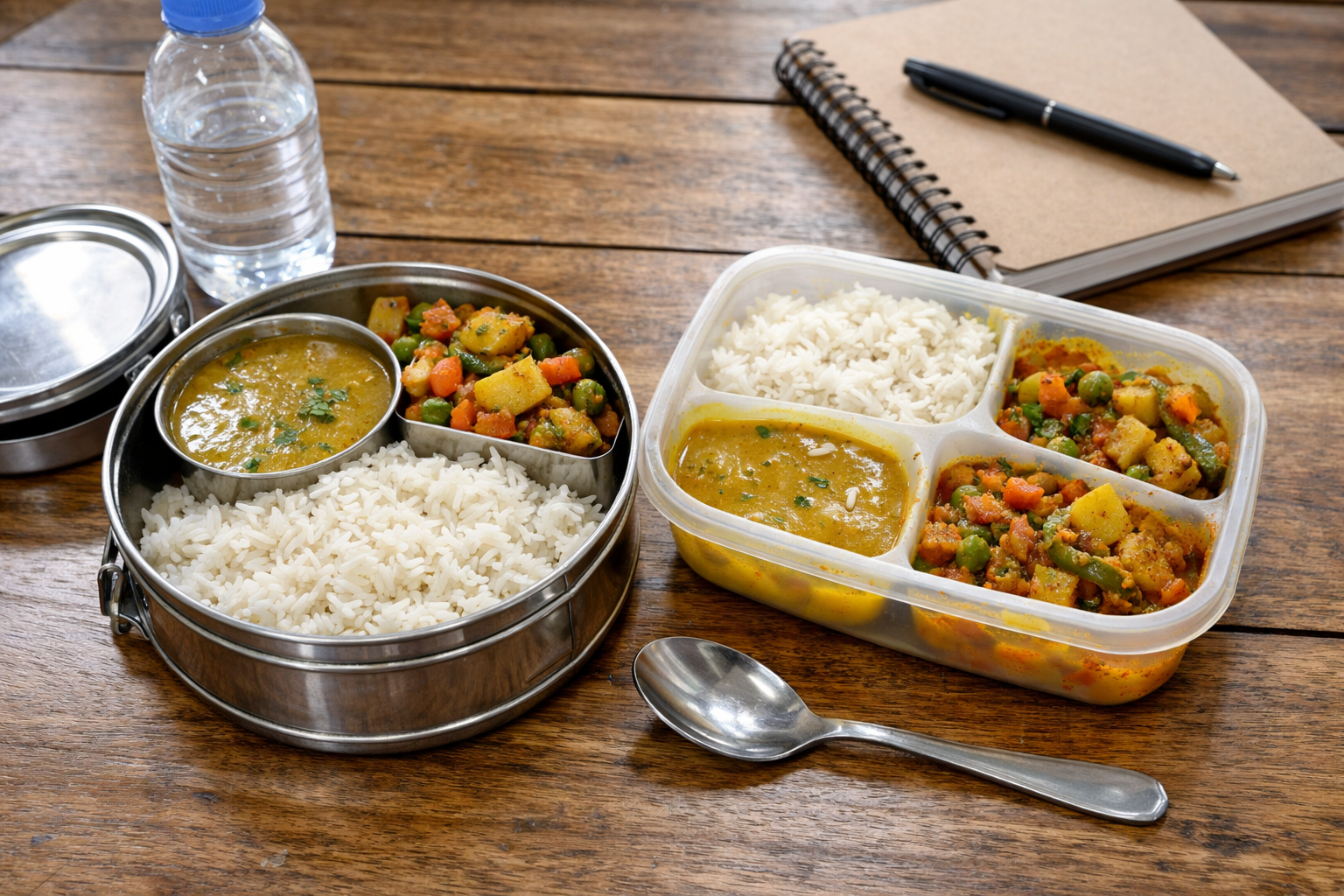
Whenever I used a steel lunch box, I noticed the food stays more stable. It doesn’t become weird in smell or taste even after long hours. Dal and rice still taste like dal and rice. Sabzi smells like sabzi, not like stored food. Even if the food becomes cold, it still feels clean. The biggest thing I like about steel is that it doesn’t hold yesterday’s smell. You can pack chicken curry today, and tomorrow pack plain rice, and the next day pack paneer, and the steel box still feels neutral after washing. That neutral nature of steel makes a big difference because Indian food has strong spices like turmeric, garlic, onion, and masala. Steel doesn’t absorb these smells. It holds food without mixing its own smell into it. That’s why after five or six hours, the food still feels closer to fresh cooked food, even if the temperature is not warm anymore.
Plastic lunch box: good in the beginning, annoying later
Plastic lunch boxes are not useless. In fact, when you buy a new plastic lunch box, it feels like a perfect option. It’s lightweight, it looks clean and modern, and many plastic boxes come with tight lids that feel leakproof. In the first few weeks, even the food stays fine. But the real issue starts after some time. Slowly the plastic begins to absorb smells and stains, especially if you pack curry and oily sabzi regularly. One day you pack rajma, next day you pack egg curry, next day you pack fish, and slowly the box starts holding that smell permanently. Even after washing properly with dishwash soap, you can still smell old masala when you open the empty box. This is not something that happens instantly, but once it starts, it becomes a permanent problem. That’s why plastic feels fine initially, but after some months it becomes irritating, because no matter what you do, that old smell keeps coming back.
Smell is the biggest reason steel wins
If you ask me the biggest difference between plastic and steel lunch boxes, it is smell. Plastic holds smell much more than steel. And in Indian food, smell is everything. The food may be completely safe, but if the smell feels heavy or old, your mind immediately loses interest. Plastic lunch boxes, especially the ones with rubber seals in the lid, become smell traps. The smell sticks in the corners, inside the lid, and inside the rubber gasket. Sometimes the box looks clean, but the smell stays hidden inside. Once that happens, every new food you pack starts mixing with that old smell. Even simple rice or roti starts picking it up. Steel doesn’t have this issue because steel does not absorb oil and masala in the same way. If you pack strong curry in steel, yes it will smell, but after washing it properly, the smell reduces a lot and the box feels normal again. That “reset feeling” is something plastic cannot give after long-term use.
Taste difference is real, even if people deny it
Many people say containers don’t affect taste, but I don’t agree. Taste and smell are connected. If your lunch box already has a permanent masala smell, your food taste will automatically feel slightly different. After some months of plastic lunch box use, you may notice your food tastes slightly dull or closed. It’s not that plastic is directly ruining the food, but the smell from the container mixes with the food, and that changes the eating experience. Steel lunch boxes keep taste cleaner because steel stays neutral. When you open a steel tiffin, the food smells like food, not like old container smell. This is why people who eat lunch daily outside home often prefer steel. Once you compare side by side, the taste difference becomes obvious. And after that, plastic starts feeling less satisfying for regular meals.
Curry and dal are the real test for lunch boxes
If you mainly pack sandwiches, fruits, dry snacks, or biscuits, plastic lunch boxes work perfectly fine. But Indian lunch is not like that. Most of us pack dal, curry, sabzi, rice, and roti. And curry is the real test. Curry has oil, masala, and strong aroma. Plastic absorbs it quickly. It stains easily and slowly develops permanent smell. After some time, the box becomes yellowish or reddish from turmeric and tomato. Even after washing, it looks old. Steel handles curry much better. Steel doesn’t stain easily, and it doesn’t hold the smell permanently. That’s why if you pack dal and curry daily, steel is a much better long-term choice. Plastic may work, but it will start showing problems much earlier.
Rice in plastic sometimes becomes sticky and sweaty
One thing I personally noticed is that rice behaves differently in plastic. Especially in summer, when you pack hot rice and close the plastic lid tightly, steam gets trapped inside. That steam becomes moisture. Then rice starts feeling sticky, wet, and sweaty. When you open the box later, the rice doesn’t smell rotten, but it smells like stored rice. It feels like it has been sitting inside a closed environment for too long. In steel, rice stays more stable. Steel also traps heat, but it doesn’t trap moisture in the same suffocating way plastic does. So rice packed in steel often feels more normal after long hours. This is not a big difference if you eat quickly, but if you pack at 8 AM and eat at 2 PM, you will feel the difference clearly.
Roti freshness: steel feels better for long hours
Roti is another thing that changes depending on the container. In plastic lunch boxes, roti becomes soft quickly. Sometimes it becomes too soft and chewy because moisture stays trapped inside. If the curry is packed in the same box or compartment, the smell also spreads faster. In steel, roti stays a little more balanced. It doesn’t become overly sweaty. Of course, roti freshness depends on how you pack it, but steel generally gives a better result for long hours. If you are someone who carries roti daily, you will notice steel keeps the roti texture more natural compared to plastic.
Does plastic spoil food faster?
I won’t say plastic automatically spoils food faster, because spoilage depends on temperature, food type, and how long you keep it. But practically, plastic can increase the chance of food becoming unpleasant faster. Plastic scratches easily, and those scratches trap oil and food particles. Over time, bacteria can stay in those micro scratches. That’s why some plastic lunch boxes start smelling even after washing. Once that smell comes, you know hygiene is not perfect anymore. Steel is easier to clean thoroughly because you can scrub it hard without worrying. Steel also doesn’t scratch easily. So in terms of long-term hygiene, steel stays safer. This is why people trust steel for office lunch, because the food stays packed for many hours and you don’t want any risk of sour smell or bad taste.
Hot food packing: steel is stress-free, plastic is not
Steel is made for hot food. You can pack steaming hot dal, rice, sabzi, and close the lid without any worry. Steel won’t deform, steel won’t become weak, and steel won’t absorb smell permanently. Plastic is different even if your plastic lunch box is branded and says BPA-free, daily hot food packing is not ideal. Over time, plastic becomes dull, stained, and smelly. Many people don’t notice it immediately, but after a few months, they realise the box is not the same as before. Hot food is the biggest enemy of plastic containers. Steel doesn’t have that weakness. That’s why steel feels more dependable for daily Indian lunch.
Which keeps food warm longer?
Steel generally keeps food warm slightly longer than plastic, but the main difference is not warmth, it’s how the food feels when it cools down. Plastic cools faster, but it also traps moisture, which makes food feel sweaty. Steel cools slowly and feels more stable. If you use an insulated lunch bag, steel becomes even better because it holds warmth for longer and keeps the food in a better condition. Plastic can keep food warm in a strange way where the food feels warm but also smells heavier. That’s why people often say steel food feels fresher even when it is cold. If you want warm lunch regularly, the best option is an insulated steel tiffin, but between normal plastic and normal steel, steel still gives a better freshness feeling.
Leakage: plastic usually wins, but only with good quality
Many people prefer plastic lunch boxes because they are often leakproof. Most plastic lunch boxes come with locking lids and rubber gaskets that prevent leakage. Steel tiffins in old times used to leak badly, and many people still remember that experience. But now modern steel lunch boxes also come with silicone seals and tight lids, so leakage is no longer a steel problem. It depends on which product you buy. Cheap plastic boxes leak too, and cheap steel boxes leak too. But overall, plastic has more affordable leakproof options compared to steel. If leakage is your biggest concern, plastic can be convenient. But if freshness is your main concern, steel still feels better.
Cleaning experience: steel is easy, plastic is frustrating
Cleaning is honestly the biggest reason why I slowly stopped liking plastic lunch boxes. In the beginning everything feels fine because the plastic is new, smooth and shiny, so even curry washes off easily. But after some weeks, the real problem starts. Plastic scratches very fast, especially when you eat directly from the box using spoon. Even small scratches become enough to trap oil and masala inside, and after that no matter how much you wash, the box never feels fully clean. Sometimes you wash it properly with dish soap, still when you open the lid the next day, you can smell that old curry smell inside. The worst part is the lid area and corners, because plastic boxes always have those tight grooves where food gets stuck. If you pack dal or gravy items, that smell gets trapped in the lid and stays for a long time. Even if you keep it in sunlight, the smell reduces but never fully disappears. Steel is totally opposite. Steel feels stress-free because you can scrub it hard without worrying about scratches. Even if the food is oily, even if you pack chicken curry or rajma, you wash steel once properly and it becomes normal again. Steel doesn’t hold that permanent smell and doesn’t turn yellow like plastic. That’s why steel feels like a reliable daily option, because you don’t have to spend extra time doing special tricks like lemon, baking soda, or soaking in hot water. With steel, simple washing is enough, but with plastic, cleaning becomes a daily headache after some time.
Stains: plastic looks dirty even when it is washed
This is another thing that makes plastic lunch boxes feel annoying after some time. Even if you wash them properly, they start looking old and dirty. The main reason is Indian food itself. We use turmeric almost daily, we use tomato gravy, red chilli, masala, and sometimes pickle oil. All these things stain plastic very easily. One day you pack dal tadka or paneer curry, and immediately you’ll notice that yellowish shade inside the box. Then if you pack any tomato-based curry, it leaves a reddish stain that never goes away fully. The problem is not that the box is unhygienic, the problem is it looks unhygienic. When you open a stained plastic lunch box in office, it doesn’t feel nice, even if the food is fresh. It feels like the box is old, and your mind automatically feels the food is also old. And the worst part is, once plastic gets stained, you can’t remove it completely. You can try soaking in hot water, lemon, baking soda, vinegar, everything, but the stain remains lightly forever. Steel doesn’t have this problem. Steel might get a little oily layer sometimes, but once you wash it properly, it looks clean again. That’s why steel feels more premium and fresh even after years. Plastic may work fine initially, but stains make it look cheap and used very fast, and that is one big reason people replace plastic lunch boxes again and again.
Durability: steel lasts years, plastic needs replacement
If you use a lunch box daily, durability becomes a real issue, not just a small point. Steel lunch boxes are honestly built like they can survive anything. You can drop them, throw them in a bag, keep them in a crowded office shelf, and nothing really happens. Yes, sometimes steel gets dents, but even after dents it works perfectly fine. The lid still closes properly, the box stays usable, and you don’t feel like buying a new one. That’s why steel feels like a one-time purchase. Plastic is completely different. In the beginning it looks nice, but slowly the problems start. The lid becomes loose, the clips break, the edges start cracking, and sometimes the box gets bent shape if it falls. Even if it doesn’t break, after some months it starts looking old because of stains and scratches. The plastic also becomes slightly dull and rough, and that’s when the smell problem becomes permanent. Most plastic lunch boxes don’t actually die in one day, but they become so irritating that you yourself feel like replacing them. I’ve seen this happen many times. People buy a plastic box, use it for one year, then throw it away and buy another. Steel doesn’t create that cycle. Even after 4 or 5 years, steel still feels usable. That’s why if you calculate long-term, steel is actually cheaper, because plastic forces replacement again and again, while steel stays strong for years without any tension.
Health safety: I personally trust steel more
I’m not someone who gets scared easily after reading random internet claims, and I’m not saying plastic is poison or something dramatic like that. But if you ask me honestly what I feel more comfortable using daily, especially for hot Indian food, it’s definitely steel. The reason is simple. Steel feels stable and predictable. It doesn’t change shape, it doesn’t develop a weird smell over time, and it doesn’t feel like it is reacting with food. Plastic, even when it is branded and says “BPA-free,” still doesn’t give that same confidence for long-term daily use. The real problem is that most people don’t use plastic carefully. We pack hot food, we wash it with rough scrubbers, we keep it in sunlight, sometimes we even heat it, and after months it becomes scratched and dull. Once plastic becomes scratched, it stops feeling hygienic, and that’s when people start doubting it. Also, Indian food is not plain food. We pack hot curry, dal, oily sabzi, pickle, and sometimes even sour foods like lemon or tamarind-based items. In those situations, steel feels like the safer and more natural choice. That’s why in most Indian homes, steel is trusted for daily food storage since years. Plastic is fine for snacks and fruits, but for everyday lunch, especially if you’re carrying food for long hours, steel gives more peace of mind. It’s not fear, it’s just trust built from experience.
So which keeps food fresh longer: plastic or steel?
After using both for a long time, I can say one thing clearly, steel keeps food fresh for longer hours in real Indian conditions. And I’m not saying this because steel is traditional or because people online say plastic is bad. I’m saying it because I have personally felt the difference many times. When food is packed in steel, it stays closer to its original taste and smell. Even if it becomes cold, it still feels normal when you eat it. But with plastic, especially if you use it regularly for curry and dal, after some months the box itself starts holding smell and stains. That smell mixes with the food, and then the food doesn’t feel fresh even if it is cooked properly. In summer season, this difference becomes even bigger because plastic traps steam and moisture, which makes rice sticky and curry smell heavier. Steel doesn’t create that same suffocating effect. So if your main goal is that your lunch should feel fresh at 1 or 2 PM, steel is simply more reliable. Plastic is still useful for fruits, snacks, and travel because it is lightweight and sometimes more leakproof, but for daily Indian meals like rice, dal, roti, sabzi, and curry, steel wins in terms of freshness. It keeps the food cleaner in taste, cleaner in smell, and you don’t get that stored feeling when you open the lid.
What I personally recommend
If you ask me what I would suggest to someone buying a lunch box today, I would say don’t overthink too much, just choose steel if you are going to use it daily. Steel is one of those things that may feel slightly boring compared to modern plastic boxes, but in daily life it performs better. It stays clean, it doesn’t hold smell, and even after months it still feels like a proper lunch box. Plastic looks attractive in the beginning, but after some time it starts showing problems like stains, scratches, loose lids, and that permanent masala smell which makes you feel irritated. That’s why if you are packing regular Indian food like dal, sabzi, rice, curry, or roti, a stainless steel lunch box is the safest and most practical option. At the same time, I’m not saying throw away plastic completely. Plastic still makes sense for light items like fruits, salad, dry snacks, or even biscuits because it is lightweight and convenient. So the best setup in my opinion is very simple: use steel for your main meal, and keep one small plastic container only for fruits or snacks. This combination works perfectly in Indian lifestyle, and it gives you both freshness and convenience without any tension.