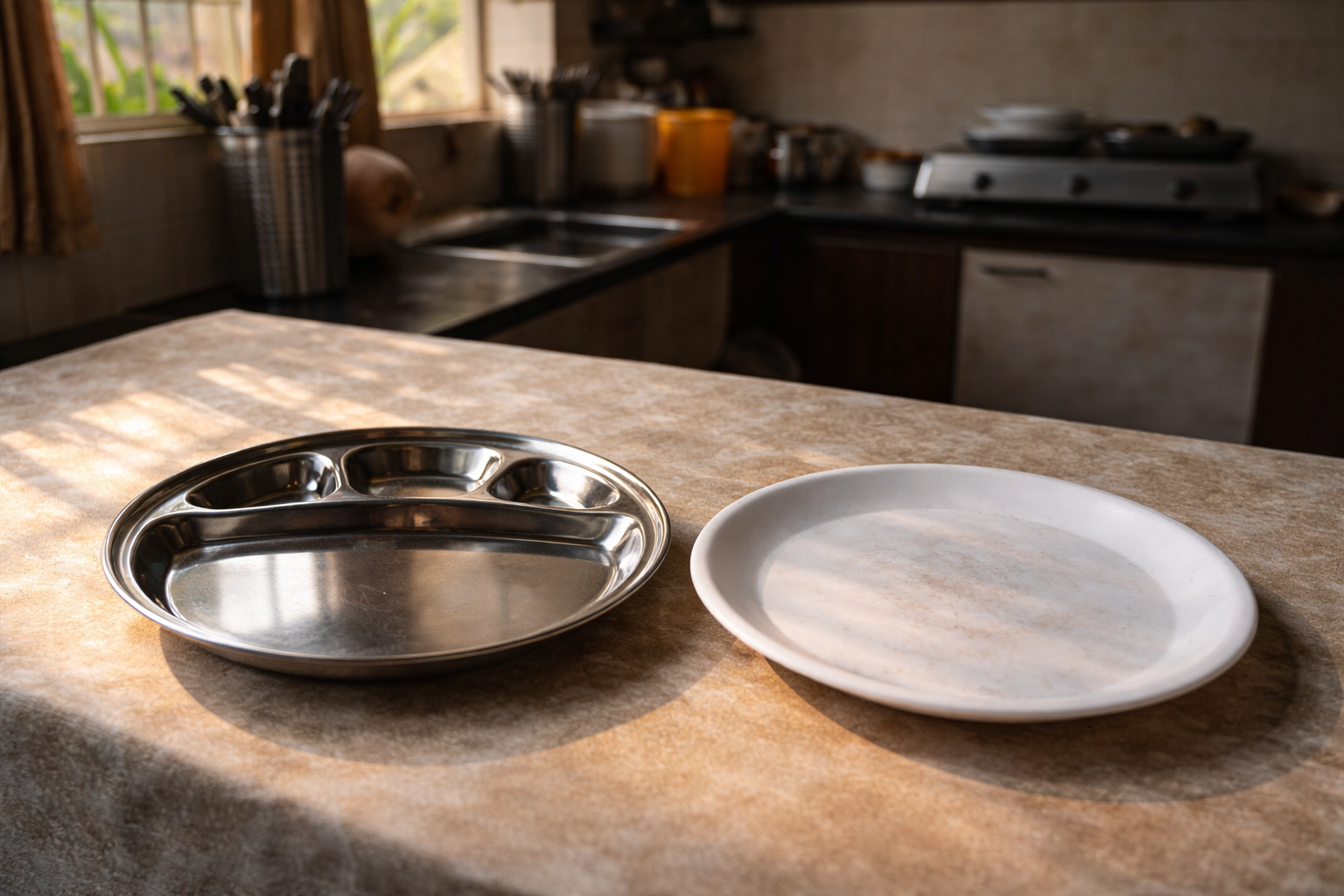
Why Stainless Steel Plates Are Better Than Plastic for Daily Meals
I never thought plates deserved this much attention. Like you, I assumed a plate is just a plate. Food goes on it, you eat, you wash it, end of story. When you’re busy with daily life, plates feel like the least important decision in a kitchen.
But when you use something every single day, without breaks, it slowly starts showing you things you didn’t expect. Not in a dramatic way. Not in a way that forces you to stop using it immediately. Just small signs, quietly appearing, until one day you realise you’ve been adjusting around the plate instead of the plate adjusting to you.
That’s when I started noticing the difference between stainless steel plates and plastic plates.
Why Plates Deserve More Thought Than We Give Them
You use a plate more than almost any other kitchen item. A cooker, a pan, or a mixer may be used once or twice a day. A plate is used for breakfast, lunch, dinner, and sometimes snacks in between. It holds hot food, oily food, dry food, wet food. It is washed, dried, stacked, and reused again and again.
When something goes through this cycle daily, the material matters. Small weaknesses don’t stay small for long. They slowly turn into daily irritations.
This is not about style or tradition. It’s about daily comfort.
Why Plastic Plates Feel Fine in the Beginning
I understand why plastic plates are popular. They are light. Easy to carry. They don’t make noise. They look clean and colourful when new. If you’re setting up a kitchen quickly or buying plates without much thought, plastic feels like an easy decision.
In the beginning, there is nothing to complain about. Food sits properly. You eat normally. Washing feels simple. You don’t feel any problem.
That’s because plastic plates don’t fail suddenly. They don’t crack on day ten or warp in one week. Their changes are slow, almost invisible at first.
And that’s exactly why people keep using them even when small issues start appearing.
What Daily Hot Food Does Over Time
We eat hot food almost every day. Rice comes straight from the cooker. Dal and curry are served hot. Rotis come fresh from the tawa. This is normal daily eating, not something special.
Stainless steel plates are built for this. Heat doesn’t bother them. You serve hot food, eat, wash, and move on without thinking.
Plastic plates react differently. Not in a way that scares you, but in a way that slowly changes their feel. After months of serving hot food, some plastic plates start feeling softer than before. They may bend slightly when you press food. Some stop sitting perfectly flat on the table.
These are not big problems individually. But when you eat three times a day, every day, you feel them.
Eating Comfort Is Something You Notice Only When It’s Missing
Nobody talks about eating comfort, but you feel it every single day.
When you eat from a steel plate, it stays firm. It doesn’t move much. It doesn’t flex when you mix rice or tear roti with your hand. It feels stable.
Plastic plates are lighter. Some of them flex slightly. Some slide a little on smooth tables. You adjust automatically, but your body notices the difference.
Over time, you start preferring the plate that doesn’t need adjustment.
Cleaning Is Where the Real Difference Shows
Indian food is not dry or plain. It has oil, spices, masala, turmeric, and strong flavours. Plates need proper washing after every meal.
Stainless steel plates clean easily. Even after oily food, normal washing usually removes everything. The surface stays smooth even after years.
Plastic plates are different. Turmeric leaves yellow marks. Oil leaves dull patches. To remove them, you scrub harder. Scrubbing creates scratches. Scratches trap more dirt and smell. Next time, you need even more effort.
This becomes a loop. More scrubbing leads to more damage, which leads to even harder cleaning.
Steel plates don’t pull you into this cycle.
How Plates Start Looking Old
Plastic plates look good when they are new. Smooth, shiny, colourful.
After months of daily use, they lose shine. Scratches become visible. Even when clean, they don’t look fresh.
Steel plates age differently. They may get light scratches, but they still look usable and clean even after years. You don’t hesitate to serve food on them.
This affects how you feel about your own kitchen, even if you don’t realise it consciously.
Smell Is a Quiet Problem People Don’t Like Talking About
Strong food like fish, garlic, or spicy curry can leave smell in plastic plates. Even after washing, a faint smell sometimes stays.
Steel plates don’t hold smell easily. After washing, they feel neutral.
That small confidence matters when you eat daily.
Shared Use Makes Differences Clear Faster
In many homes, plates are shared. Someone eats first, someone eats later. Someone washes carefully, someone rushes. Someone stacks properly, someone doesn’t.
Plastic plates don’t handle shared use well over time. They scratch faster. They lose shape faster. They start looking tired.
Steel plates don’t care much about who used them last. They handle rough use quietly.
Durability Over Years, Not Days
Plastic plates are light, but they don’t age well. Cracks, chips, bending appear slowly.
Steel plates last for years. Dropping them doesn’t break them. Stacking them doesn’t damage them.
For something you use daily, long-term strength matters more than lightness.
Cost Looks Different When You Think Long-Term
Plastic plates are cheaper initially. But when you replace them every few years, the cost adds up.
Steel plates cost more once, but they last much longer.
Over time, steel often turns out to be the cheaper option.
This Is Not About Fear or Panic
I’m not trying to scare you about plastic. This is not about extreme claims.
Steel feels stable and dependable. Plastic confidence reduces over time with heat and scratches.
For daily eating, people naturally prefer what feels reliable.
Plastic Still Has Its Place
Plastic plates are useful for travel, picnics, kids, and outdoor eating. I still use them sometimes.
The problem starts when plastic is used for everything, every day.
Why Many People Quietly Switch Back to Steel
Many people don’t announce it. They don’t make a big decision. They just slowly start using steel more often.
One day you realise the steel plates are used daily, and plastic ones stay in the cupboard.That shift happens naturally.
Many people don’t even notice when it happens. There is no big decision or sudden change. It’s just that slowly, steel plates start feeling more “normal” again. Plastic plates may look convenient in the beginning, but after some time people start getting irritated with stains, scratches, smell retention, and that slightly cheap feel. Steel, on the other hand, feels solid, clean, and long-lasting. Especially in Indian homes, steel has always been the trusted option for daily meals. So without thinking too much, people naturally begin using steel more for regular food, and plastic plates slowly move to the back of the kitchen cupboard, only coming out for travel, guests, or outdoor use.
The Honest Personal Take
For daily meals, stainless steel plates create fewer problems. Less cleaning effort. Less doubt. Less replacement.
Plastic plates feel temporary. Steel feels settled.
That’s why steel works better for everyday eating.
How Daily Washing Slowly Changes Your Plates
One thing you don’t realise at first is how much washing affects a plate over time. You may think washing is just cleaning, but for plates that are used every day, washing becomes the real test. Morning, afternoon, night, sometimes even more, the plate goes under water, gets scrubbed, rinsed, wiped, and stacked again. Stainless steel handles this routine quietly. You can use a normal scrub, wash with soap, rinse, and the surface remains more or less the same. Plastic plates, on the other hand, start reacting to this daily treatment. Scrubbing creates tiny scratches. Those scratches are not visible from far, but you can feel them with your fingers. Over time, these scratches hold food particles, oil, and smell more easily. So even when the plate looks clean, it doesn’t feel completely fresh anymore. This is not because you are washing badly. It’s simply how plastic behaves when it is scrubbed daily for months and years.
When this happens, you often start scrubbing harder without realising it. You think the plate is not clean enough, so you apply more pressure. That only makes the surface rougher. This cycle doesn’t really end. With steel plates, this cycle never starts. Even after years, the surface stays smooth enough that normal washing feels enough. That difference becomes very clear only after long-term use.
Living With Plates That Are Used by Everyone
In real homes, plates are not personal items for one person only. They are shared. One person eats early, another eats late. Someone eats rice, someone eats roti. Someone washes carefully, someone washes in a hurry because there are other chores waiting. Stainless steel plates don’t react much to this kind of shared life. They are forgiving. They don’t mind who used them or how fast they were washed. Plastic plates are less forgiving. Shared use speeds up their wear. They lose shape faster. They scratch faster. They start looking uneven when stacked. None of this is dramatic, but slowly you start separating “good plates” and “bad plates” without planning to. Usually, steel plates become the “good plates” without effort.
This is also why many families slowly move plastic plates to occasional use. Not because someone decided it clearly, but because steel plates feel easier in daily shared routines.
How Storage and Stacking Affect Daily Experience
Storage is another small thing that becomes big over time. Steel plates stack neatly. Even if there are minor scratches, they sit flat. They don’t wobble. You can stack many together without worrying. Plastic plates, especially after months of use, may not stack properly. Some bend slightly. Some don’t sit flat. When you open the cupboard, the stack feels uneven. You may not think about it consciously, but it adds to daily irritation. In small kitchens, this matters more than people admit.
Steel plates also take less mental space. You don’t think about arranging them carefully. You just stack and move on. Plastic plates often need adjustment.
Children, Elders, and Everyday Eating
Many people choose plastic plates thinking they are safer for children because they are light. That makes sense in some situations. For very small kids, plastic plates can be useful. But when it comes to elders, steel plates often feel better. They don’t slide easily. They don’t bend. Eating feels stable. For elders who eat slowly or carefully, this stability matters.
In many homes, the natural balance becomes clear over time. Plastic plates are used for kids or special situations. Steel plates become the default for adults and elders. This balance happens naturally, without anyone sitting down to decide it.
The Question of Cost Over the Years
At the time of buying, plastic plates feel cheaper and sensible. Steel plates feel expensive. But daily-use items should not be judged only by the buying price. Plastic plates often need replacement after a few years. They crack, bend, or look too old to keep. Steel plates don’t demand replacement unless something extreme happens. When you look back after five or six years, you realise you spent more replacing plastic plates than you would have spent buying steel once.
This realisation usually comes late, after the money is already spent. But once you see it, you don’t forget it.
Confidence While Eating Is a Real Feeling
There is also something emotional about daily eating that people don’t talk about openly. When you sit down to eat, you want to feel comfortable. You want the plate to feel clean, stable, and reliable. Steel plates give that confidence. Plastic plates sometimes create doubt, especially when they are old. You may ask yourself if it’s fully clean, if the smell is really gone, if the surface is still okay. Even if these doubts are small, they affect your experience.
Daily meals are not just about food. They are about comfort and routine. Steel plates support that routine better.
How Habits Slowly Decide What You Use Every Day
One thing I have learned from daily life is that habits are not made by rules. They are made by comfort. You don’t sit down and decide which plate you will use every day. You just reach for the one that feels easiest. The one that doesn’t need checking, adjusting, or thinking. Over time, that choice becomes automatic.
This is where stainless steel plates quietly take over. They don’t demand attention. You don’t worry about heat, stains, smell, or bending. You use them, wash them, and stack them without thinking. Plastic plates, on the other hand, slowly start demanding small adjustments. You become careful with hot food. You scrub more. You check if the plate still looks okay. These are small things, but when repeated daily, they matter.
The best daily-use items are the ones you forget about. When you sit down to eat, you should be thinking about food, not the plate under it. Stainless steel plates reach this stage easily. They blend into your routine.
Plastic plates rarely disappear completely from your mind. Even after long use, they remind you of their presence through stains, smell, or shape changes. That constant awareness breaks the ease of daily meals.
What I’d Choose for Everyday Meals
Daily meals are part of routine, comfort, and rhythm. The plate you eat from should support that rhythm, not interrupt it. Stainless steel plates do that quietly. They don’t impress you on day one, but they stay with you for years without creating small problems.
Plastic plates have their place, but daily eating usually isn’t it.
When you choose what fits your daily routine instead of what looks convenient at first, the kitchen feels easier to manage. And over time, that ease matters more than anything else.