Pressure Cooker Efficiency vs Gas Consumption
Almost every Indian home uses a pressure cooker daily. Dal in the morning, rice for lunch, sabzi or curry at night. Because it’s so common, most of us never stop to think how much gas the cooker is actually using.
Then one day the LPG cylinder finishes early.Another person blames rising prices.
Rarely does anyone suspect the pressure cooker.
But in many homes, inefficient pressure cooker usage quietly increases gas consumption every month. The cooker still whistles, food still cooks, so we assume everything is fine. In reality, small issues build up over time and waste more gas than we realise.
This is not about buying a new cooker immediately. It’s about understanding how efficiency really works in an Indian kitchen.
Why this happens
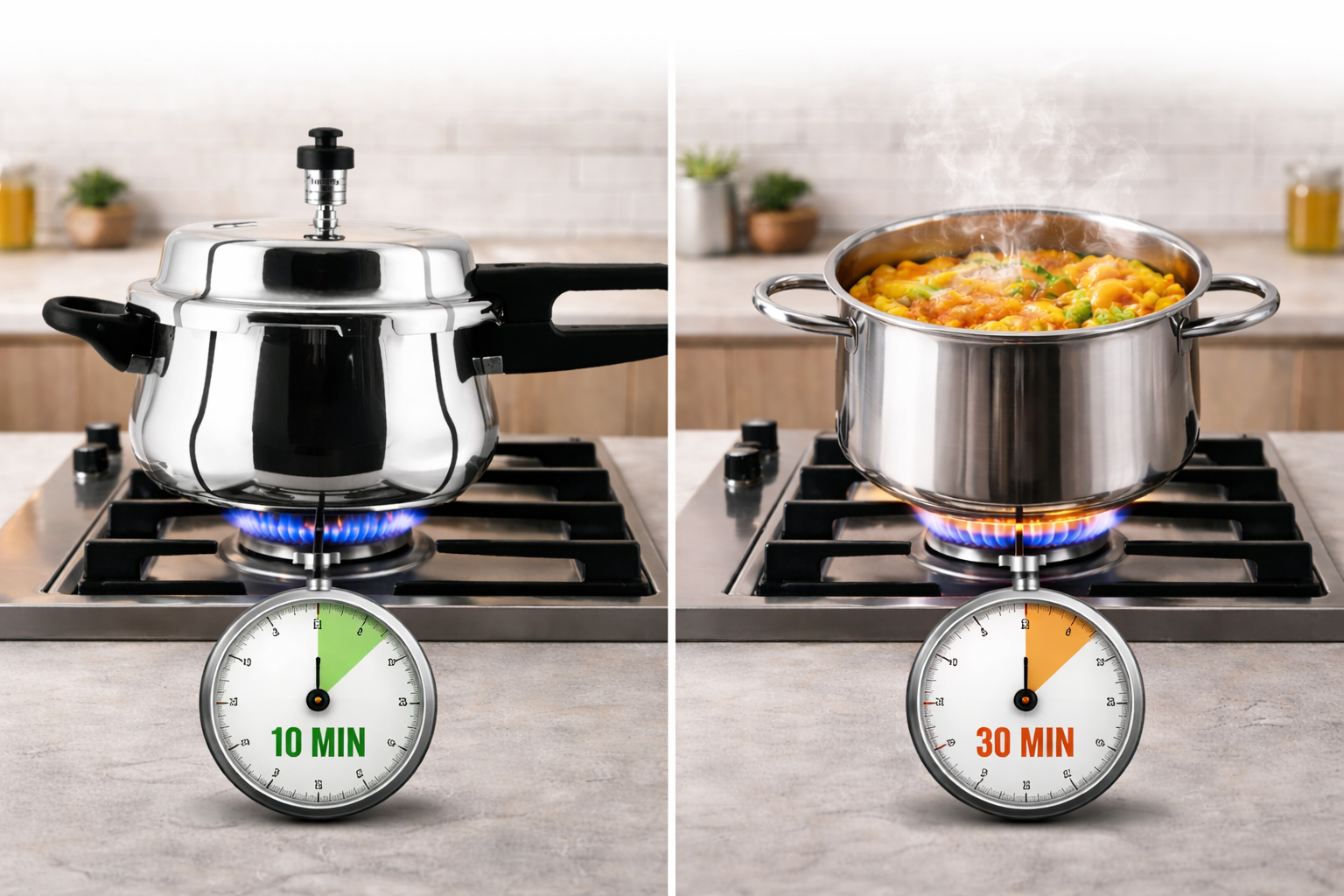
A pressure cooker saves gas only when it works as intended. The idea is simple: trap steam, build pressure, cook faster.
But efficiency drops when:
• Cooker size does not match family cooking
• Flame is kept high unnecessarily
• Gasket or valve is worn out
• Cooker is overfilled or underfilled
• Cooking habits are rushed or inconsistent
Many families use the cooker like a normal pot, keeping high flame even after the first whistle. Others cook very small quantities in a large cooker, which takes longer to pressurise.
Efficiency is not about brand or price. It’s about how fast pressure builds and how well it is maintained.
This links closely with choosing the right cooker size. If size selection itself is wrong, efficiency will always suffer. That’s why understanding pressure cooker size for family is the base of gas saving.
How long should a pressure cooker actually take to build pressure?
In a typical Indian kitchen, a pressure cooker that is working efficiently should reach proper pressure in a predictable amount of time. For most daily cooking like dal, rice, or vegetables, pressure usually builds within a few minutes on medium flame. This timing depends on factors like water level, food quantity, and cooker size, but it should stay consistent over time. When a cooker slowly starts taking longer than usual to reach the first whistle, it is rarely a coincidence.
Delayed pressure buildup usually means steam is escaping somewhere or heat is being wasted. This could be due to a slightly hardened gasket, excess water, or cooking a very small quantity in a large cooker. Because pressure is slow to build, people often keep the flame high for longer without realizing it. The food still cooks, so the issue goes unnoticed, but gas consumption quietly increases every day. Over weeks and months, this delay alone can shorten the life of an LPG cylinder significantly.
A good way to judge efficiency is not by whistle count but by how steadily and quickly pressure builds. If the cooker used to reach pressure faster earlier and now takes longer with the same recipe, it is a clear signal that efficiency has dropped, even if cooking results look normal.
Why pressure cooker gas wastage happens even when food cooks perfectly
One of the biggest misconceptions is that gas wastage only happens when something is obviously wrong. In reality, a pressure cooker can cook food perfectly while still wasting gas. Small and continuous steam leaks are the most common reason. These leaks may come from the rim, gasket, or valve area and are often too mild to cause concern. Because the cooker still whistles and food gets done, most people assume everything is fine.
What actually happens is that escaping steam prevents stable pressure from being maintained. To compensate, the burner stays on longer, and the flame is often kept higher than needed. This extra heat does not improve cooking quality, but it does increase fuel usage. Over time, this becomes a habit, especially in busy households where speed matters more than efficiency.
Another hidden cause is inconsistent cooking practice. Some days the flame is reduced after the first whistle, and other days it is not. Sometimes water is measured, sometimes guessed. These small variations disrupt how pressure cookers are meant to work. Efficiency depends on controlled pressure, not aggressive heat. When control is missing, gas usage rises slowly and steadily, without any clear warning sign.
Pressure cooker efficiency vs gas use
This table reflects common Indian cooking patterns.
| Cooking situation | Gas efficiency | Reason |
| Correct cooker size, medium flame | High | Pressure builds quickly |
| Small quantity in large cooker | Low | Takes longer to heat |
| Overfilled cooker | Low | Steam escapes, slow cooking |
| High flame after whistle | Very low | Wastes gas |
| Old gasket or valve | Low | Pressure leaks |
| Proper water level | High | Faster pressure build |
This is why two homes cooking the same dal can have very different gas bills.
Is high gas consumption dangerous or just expensive?
Mostly it is not dangerous, but it can become unsafe if ignored.
High gas use itself only means more expense. But the reasons behind it can be risky:
• Blocked vent or whistle
• Continuous steam leakage
• Cooker overheating due to high flame
Many households face pressure cooker whistle problems like nonstop whistling or no whistle at all. These are not just noise issues. They affect efficiency and safety together.
If pressure escapes repeatedly, gas keeps burning longer and cooker parts wear faster.
So it’s safe to say:
• High gas use = warning sign
• Not an emergency, but should not be ignored
Understanding basic pressure cooker safety for Indian kitchens helps catch these issues early.
What to do at home
You don’t need new equipment to improve efficiency. Small habit changes make a big difference.
Step 1: Match flame to stage
• High flame only till first whistle
• Immediately reduce to low or sim
• Never keep full flame throughout
Step 2: Use correct water
• Too little water burns food
• Too much water delays pressure
• Follow recipe logic, not guesswork
Step 3: Check gasket and valve
• Gasket should feel soft, not hard
• Valve should move freely
• Replace if steam leaks from sides
Step 4: Avoid size mismatch – Cooking small quantities daily in a big cooker wastes gas. If your family is small, reconsider size logic or use a smaller cooker for daily meals.
This problem is very common in homes confused between 3 litre vs 5 litre pressure cooker options.
Step 5: Keep lid and rim clean – Food particles on rim stop proper sealing. Even a thin layer can leak pressure slowly.
Step 6: Don’t rush cooking – Many people increase flame to “save time”. It actually wastes gas and stresses the cooker.
When to stop using or replace the cooker
Pressure cookers don’t fail suddenly. Efficiency drops slowly.
You should think of replacing or adding another cooker if:
• Cooking time has increased noticeably
• Whistle behaviour has changed
• Gas usage has gone up without reason
• Cooker needs frequent repairs
• Family size or cooking pattern changed
Some people feel old cookers were more efficient. There are reasons why older pressure cookers feel more reliable, but age alone does not guarantee efficiency. A well-maintained new cooker can be equally gas-efficient.
In many Indian homes, the best solution is:
• One small cooker for daily dal or rice
• One bigger cooker for curries, guests, bulk cooking
This balance improves efficiency and reduces gas waste.
Conclusion
A pressure cooker is meant to save time and gas. When it doesn’t, the problem is usually not the cooker itself, but how it’s being used.
Efficiency depends on:
• Right size
• Right flame control
• Proper maintenance
• Calm cooking habits
You don’t need to chase brands or expensive models. Focus on how pressure builds and how steam is controlled.
If gas cylinders are finishing earlier than expected, look at your pressure cooker first. Small changes today can save money every month, quietly and safely.
A good pressure cooker does its job silently. When gas consumption rises, it’s the cooker’s way of asking for attention, not replacement.