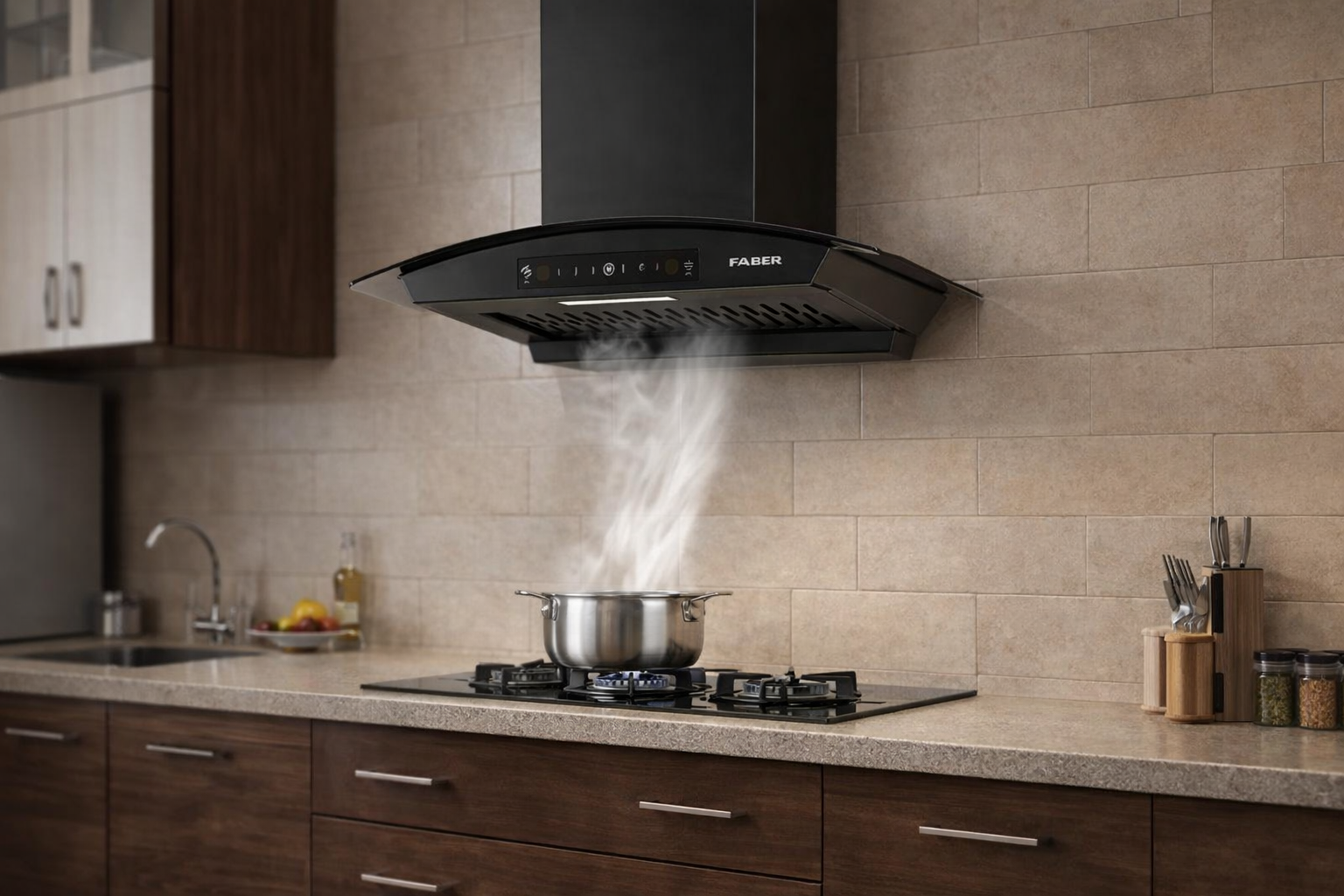
Ducted vs Ductless Chimneys: The Long-Term Reality in Indian Homes
If you ask Indian homeowners about kitchen chimneys, one question comes up again and again.
“Should I buy a ducted chimney or a ductless one?”
At first, the choice looks simple.One throws smoke outside.The other doesn’t need drilling.But the real confusion starts after a few years of use.
Many families feel cheated later.
The chimney worked fine in the beginning, but slowly the kitchen started smelling again. Oil came back on tiles. Noise increased. Cleaning became frequent.
This article is written for that reality.
Not showroom demos.
Not brand promises.
Only what actually happens in Indian kitchens after daily cooking.Ducted vs ductless chimney confusion is common in Indian homes, especially for daily oil-based cooking.
The real-life problem most families face
Most people don’t plan to buy a chimney on day one.
They buy it after problems start.
• Oil on walls
• Smell stuck in curtains
• Cabinets turning sticky
• Heat building up while cooking
Especially in flats with closed kitchens, cooking becomes uncomfortable.
So you buy a chimney with hope that this problem is solved forever.
But after 2 to 3 years, many families ask: “Why is my chimney not working like before?”
That’s where ducted vs ductless reality
Why Indian kitchens are harder on chimneys
This part is often ignored.
Indian cooking is not gentle.
We cook with:
• High oil content
• Long frying time
• Strong masalas
• Daily tadka
• Pressure cooker steam mixed with oil
This creates thick, oily smoke, not just steam.
Most chimneys sold in India are designed on paper for global use.But real Indian cooking pushes them harder.So the chimney type matters a lot in the long run.
What a ducted chimney really does
A ducted chimney has one simple job.
It pulls smoke and oil and throws it outside through a pipe.
That’s it.
Because air leaves the house:
• Smell reduces fast
• Oil does not circulate inside
• Kitchen air feels lighter
If installed properly, this system stays effective for many years.
What a ductless chimney really does
A ductless chimney works very differently.
It:
• Pulls air in
• Passes it through filters
• Pushes the same air back into the kitchen
Filters trap some oil.
Carbon filters reduce some smell.
But nothing actually leaves the house.
Over time:
• Filters clog
• Smell returns
• Oil slowly settles again
This is why performance drops after long use.
Ducted vs Ductless Chimney: Long-Term Comparison in Simple Terms
| Area | Ducted Chimney | Ductless Chimney |
| Smoke removal | Very effective | Partial |
| Oil handling | Goes outside | Trapped inside |
| Smell control | Strong | Weak after time |
| Cleaning effort | Moderate | High |
| Noise increase | Low | Common |
| Indian cooking | Suitable | Limited |
| Installation | Needs drilling | Easy |
| Long-term cost | Lower | Higher |
This ducted vs ductless chimney comparison is based on long-term use in Indian kitchens.If you cook daily with oil and spices, a ducted chimney with baffle filters usually works better in Indian homes.
For open kitchens or rented flats, a ductless chimney can be enough for light cooking.
Why ductless chimneys disappoint later
Most ductless chimney complaints sound similar.
“At first it was fine, now it’s useless.”
The reason is simple.
Filters can only hold oil up to a limit.
Once saturated:
• Suction drops
• Motor works harder
• Noise increases
• Smell passes through
Many users don’t replace carbon filters on time because:
• They are costly
• They are not easily available
• People don’t realise their importance
So performance keeps falling silently.
Why ducted chimneys also fail sometimes
Ducted chimneys are not perfect either.
Problems usually come from bad installation, not design.
Common mistakes:
• Very long duct pipes
• Too many bends
• Cheap plastic ducts
• Poor sealing at outlet
When this happens:
• Airflow reduces
• Oil sticks inside pipe
• Noise increases
People blame the chimney, but the real problem is the duct.
Is either type unsafe?
Clear answer: No, both are safe.
But comfort and air quality differ.
Ductless chimneys can slowly reduce indoor air quality because oily air keeps circulating.Ducted chimneys remove polluted air but only if the path outside is clear.Safety is not the issue,Effectiveness is.
What to do if you already own a ductless chimney
If you already have one, don’t panic.
Use it smartly.
Do this:
• Clean filters every 2–3 weeks
• Replace carbon filter when smell returns
• Open windows while deep frying
• Avoid long frying sessions daily
Understand its limits.
It helps, but it cannot behave like a ducted system.
What to do if you already own a ducted chimney
Maintenance matters here too.
Do this:
• Clean baffle filters monthly
• Check duct outlet yearly
• Fix oil leaks early
• Keep duct as straight as possible
With proper care, a ducted chimney can work well for 8–10 years.
Signs you should stop using or replace
For ductless chimneys:
• Smell stays even after cooking ends
• Filters feel greasy after cleaning
• Noise keeps increasing
• Kitchen feels sticky again
Usually after 3–4 years, replacement makes more sense.
For ducted chimneys:
• Oil dripping from duct joints
• Smoke visible in kitchen
• Loud vibration sound
Often only the duct needs repair, not the chimney.
Which one suits which Indian household
Choose ducted chimney if:
• You cook daily with oil
• Kitchen is closed
• You plan to stay long-term
• Wall drilling is allowed
Choose ductless chimney if:
• Cooking is light
• Kitchen is open
• You live in a rented house
• You want quick installation
Final honest advice
Don’t choose based on showroom demo.
Choose based on how you cook every day.
Indian kitchens are demanding.Short-term convenience often leads to long-term frustration.A good chimney should quietly do its job year after year.
You shouldn’t keep adjusting habits for it.
That’s the long-term reality most buyers realise late.