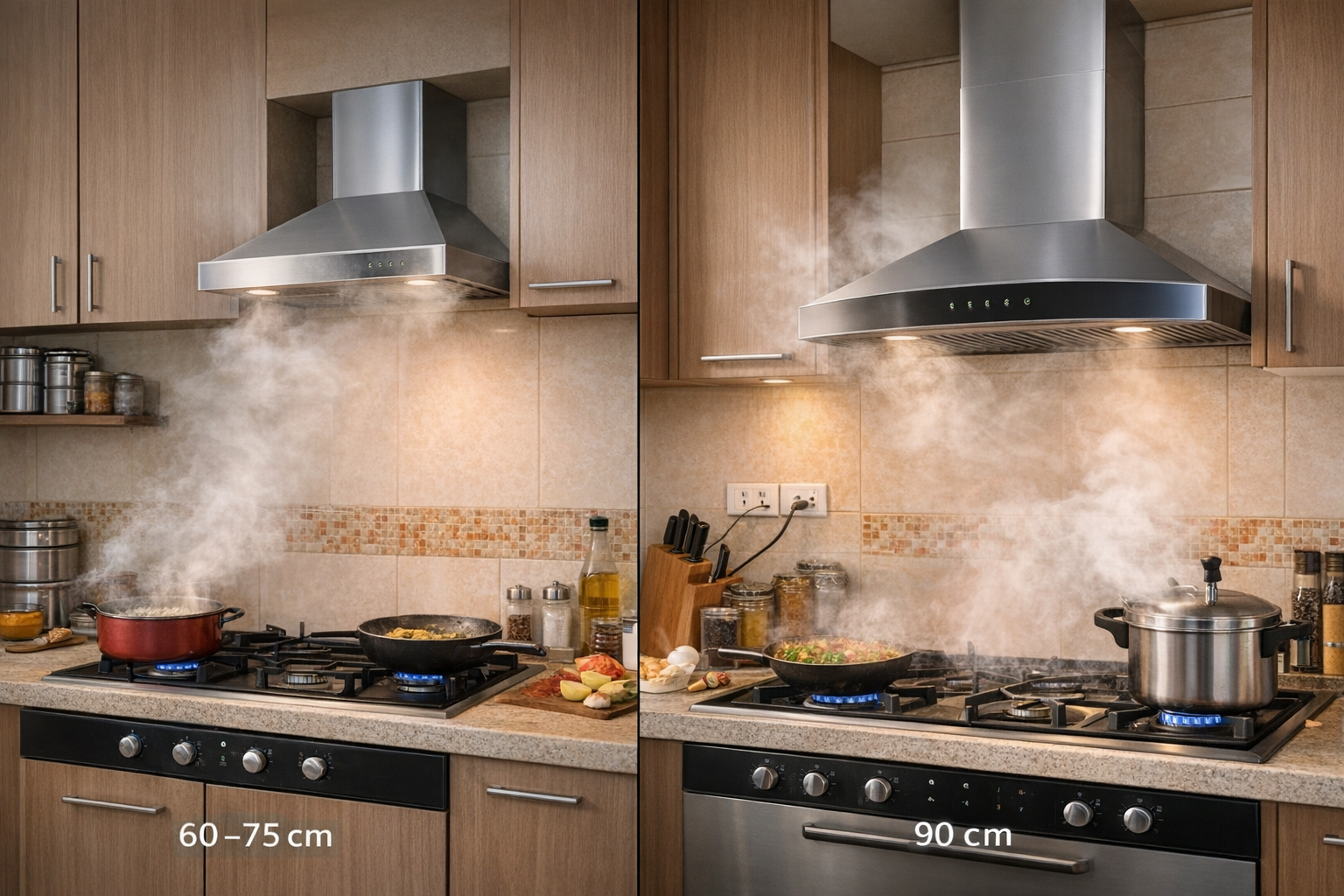
Why Chimney Size Matters More Than Brand in Indian Kitchens
Choosing the right chimney size for indian kitchen matters more than brand, especially in homes with daily frying, tadka, and high-heat cooking.Most Indian families spend weeks comparing chimney brands.
Elica or Faber?
60 cm or 90 cm?
Baffle filter or filterless?
But one common mistake happens in almost every home: people focus on brand first and ignore chimney size.
Later, they complain that smoke stays inside, oil sticks to walls, or the chimney feels useless. The truth is simple. Even the most expensive chimney will fail if the size is wrong for your kitchen and stove.
In Indian cooking, where oil, spices, tadka, and high heat are everyday things, chimney size matters more than brand name. Let’s break this down in a way that actually helps you choose right.
Why This Problem Happens in Indian Homes
Most Indian kitchens are not designed with chimneys in mind. Flats come with fixed cabinets, limited wall space, and standard 2, 3, or 4-burner gas stoves.
Salespeople often push popular brands instead of asking basic questions like:
How wide is your stove?
How many burners do you use daily?
How much frying and tadka do you do?
So people end up buying a chimney that looks good but cannot cover the smoke area properly.
A chimney’s main job is simple:
Catch smoke before it spreads.
If the size is wrong, smoke escapes. Once smoke spreads, no motor power or brand can fix it.
Why Size Is the Real Problem in Most Indian Kitchens
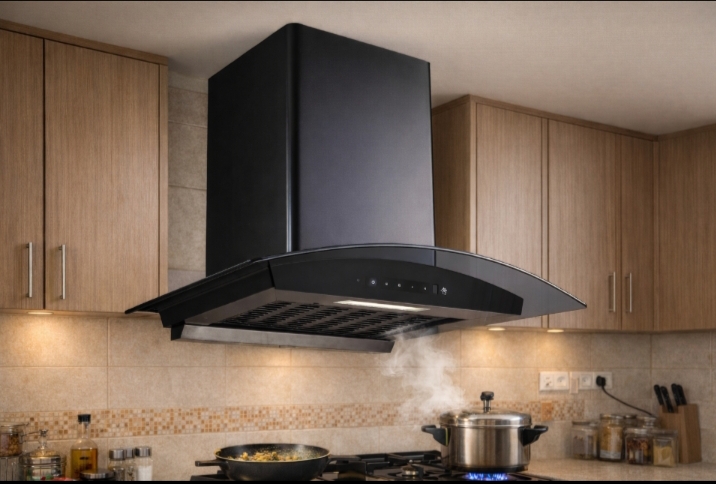
Smoke does not rise straight up
This is where many people misunderstand.
In Indian cooking, smoke spreads sideways first, especially during:
• Frying
• Tempering (tadka)
• Cooking on high flame
If the chimney is narrower than your stove, smoke escapes from the sides.
A powerful brand motor cannot pull smoke that never enters the chimney area.
Why high suction numbers often fail in real kitchens
People get attracted to suction numbers like:
• 1200 m³/hr
• 1500 m³/hr
But suction is useless if:
• The chimney does not cover all burners
• The hood area is smaller than the stove
A correctly sized chimney with moderate suction will perform better than a powerful but narrow one.
Indian cooking creates heavy oil particles
Indian food uses:
• Mustard oil
• Ghee
• Masalas
• Deep frying
These create thick, sticky smoke.
If the chimney size is small, oil particles settle on tiles, cabinets, and walls before reaching the filter.
That’s why many people say:
“Chimney laga hai, phir bhi oil jam raha hai.”
The issue is not the brand. It’s the size.
Is Using the Wrong Chimney Size Dangerous or Just Inconvenient ?
Short answer: Not dangerous, but unhealthy and expensive in the long run.
Health impact
When smoke is not captured properly, it doesn’t stay limited to the stove area. Many people notice eye burning while cooking, mild headaches, or a feeling of suffocation during long cooking sessions. Over time, poor smoke capture increases indoor air pollution, which affects children and elderly family members the most.
Kitchen damage
A wrong sized chimney slowly damages the kitchen without anyone noticing. Oil particles start settling on cabinets, walls turn yellow near the stove, and ceilings become sticky. Many homeowners end up repainting or deep cleaning the kitchen far more often than expected, which adds to long term cost.
Higher maintenance cost
Smaller chimneys struggle to handle Indian cooking smoke. Filters clog faster, suction drops quickly, and servicing becomes frequent. Even after regular cleaning, performance remains poor, which means more money spent with little improvement.
How to Choose the Right Chimney Size at Home (Practical Guide)
This is the most important section.
Step 1: Measure your gas stove width
Use a simple tape or scale.
Most Indian stoves are:
• 60 cm (2 or 3 burner)
• 75 cm (large 3 burner)
• 90 cm (4 or 5 burner)
Step 2: Chimney should be equal or wider
Golden rule: Chimney width should be equal to or larger than stove width. Never smaller.
Examples:
• 60 cm stove → minimum 60 cm chimney
• 75 cm stove → 90 cm chimney recommended
• 90 cm stove → only 90 cm chimney
Wider coverage = better smoke capture.
Step 3: Consider your cooking style
Ask yourself honestly:
• Do you fry daily?
• Do you cook on high flame?
• Do you make tadka often?
If yes, go one size bigger, even if brand cost increases slightly.
Step 4: Kitchen size also matters
Small kitchen with heavy cooking still needs proper width.
Large kitchen with open layout needs even better coverage, because smoke spreads more.
Common Mistakes Indian Buyers Make
Buying based on offers
Discounts look tempting, but:
Cheap wrong size = long-term regret
Trusting suction number blindly
Higher suction does not fix poor coverage.
Matching only with cabinet size
Cabinet alignment is secondary. Smoke capture is primary.Cabinets can be adjusted. Airflow cannot.
Assuming brand will solve everything
Brand helps with:
• Build quality
• Noise
• Service
But brand cannot fix wrong size physics.
When Should You Replace or Upgrade Your Chimney?
You should seriously consider replacement if:
• Smoke escapes from sides regularly
• Oil keeps settling on walls
• Chimney runs loudly but performance is poor
• Filters clog too fast despite cleaning
In many cases, the motor is fine. The size is wrong.
Brand Still Matters, But After Size Is Right
Once size is correct, then brand matters for:
• Motor life
• Noise level
• Service availability
• Build quality
Think of size as foundation and brand as finishing.
Without foundation, finishing fails.
Final Honest Advice (Read This Carefully)
If you remember only one thing from this article, remember this:
A properly sized chimney from an average brand will outperform a premium brand chimney of the wrong size.
Before buying:
• Measure stove width
• Think about cooking habits
• Ignore showroom pressure
• Choose coverage first, brand second
Indian kitchens are intense. Your chimney must be built for reality, not showroom looks.
Choose size wisely.
Your lungs, walls, and money will thank you.