Why Mixer Grinder Jars Crack, Leak, or Fail Early in Indian Homes (The Reality Nobody Explains)
In most Indian kitchens, the mixer grinder is not an occasional appliance. It runs almost every day. From soaked dal batters and coconut chutney to dry masalas and spice blends, one machine is expected to handle everything.
This daily usage pattern is very different from how mixer grinders are tested and designed. As a result, many Indian households face the same problems within one or two years: jar cracks, leakage near the base, loose blades, vibration, or burning smell.
In most cases, this is not a brand defect. It is a mismatch between Indian cooking habits and mixer grinder design limits. Once this mismatch is understood, many common failures become predictable and preventable.
This article explains why mixer grinder jars fail early in Indian homes, what actually causes the damage, and how realistic usage changes can significantly extend jar life.
Why Mixer Grinder Jar Problems Are So Common in India
Mixer grinder jar problems usually start after months of heavy grinding, thick batters, and dry spice usage in Indian kitchens.Most mixer grinders are designed assuming controlled ingredient quantity, measured liquid ratios, short grinding cycles, and occasional use.
Indian kitchens operate very differently. Thick batters, soaked lentils, coconut grinding, and spice pastes are prepared daily. Water is added by estimation, not measurement. Jars are reused back-to-back for wet and dry ingredients.
This combination places continuous stress on the jar body, blade assembly, and base seal. Over time, this stress weakens components even if the motor remains perfectly fine.
The Real Reason Mixer Grinder Jars Crack (It’s Not Just Plastic Quality)
Jar cracking usually begins as invisible micro-stress rather than sudden damage. Most jars are made from food-grade polycarbonate or ABS blends, which are strong but sensitive to repeated internal pressure.When thick batters are ground, soaked ingredients expand and push outward against the jar walls. Stress concentrates near the bottom curve and blade base. Repeating this process daily slowly weakens the structure.
Temperature shock also plays a role. Grinding dry spices generates heat. Switching immediately to wet grinding causes sudden cooling. Plastic and metal expand at different rates, which weakens the joint between the jar and blade assembly over time.
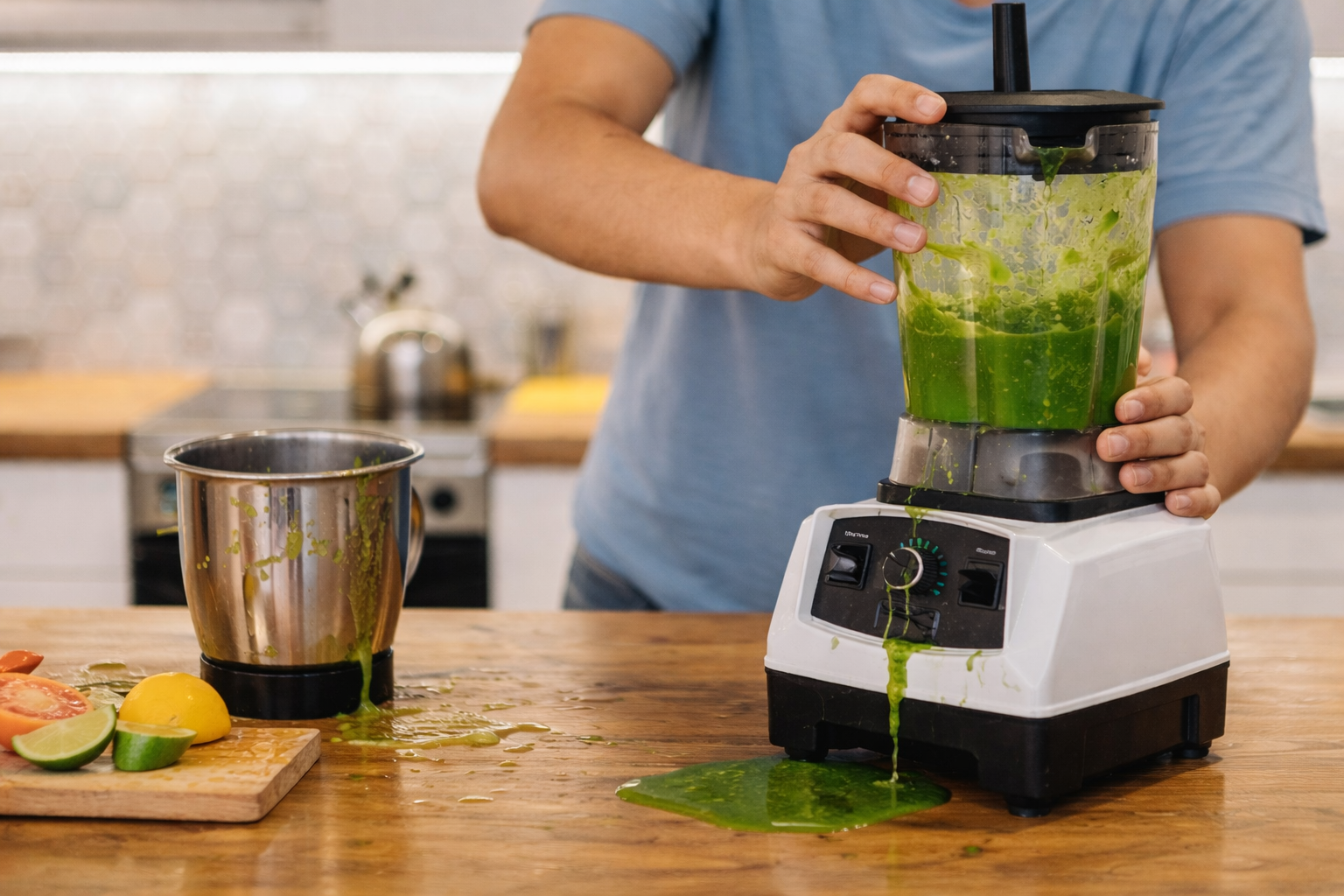
Overfilling the jar, even slightly, increases internal pressure sharply once grinding starts, accelerating crack formation.
Why Jar Leakage Starts Near the Blade and Keeps Returning
Most leakage problems originate near the blade base. Inside the jar, a rubber oil seal prevents liquid from entering the motor area while allowing the blade shaft to rotate at high speed.
Thick chutneys and batters push residue into this seal. Heat hardens the rubber, and fine spice particles cause abrasion. Once the seal degrades, tightening the blade does not solve the problem.
This is why leakage often returns within weeks even after repair. The seal itself has lost flexibility and sealing ability.
Why One Jar Fails Faster Than Others in the Same Mixer
In many homes, the chutney or wet grinding jar fails first. This jar handles the highest moisture content, frequent overfilling, and rapid grinding cycles. It is also commonly used for emulsifying and grinding thick pastes.Dry jars last longer because they do not experience liquid pressure on the seal. Medium jars fall somewhere in between depending on usage pattern.
This uneven failure is caused by stress distribution, not manufacturing inconsistency.
The Hidden Role of Coupler Wear in Jar Failure
The coupler connects the jar to the motor shaft. When it wears unevenly, it causes vibration and slight blade misalignment. This misalignment increases pressure on the jar base and seal.
Replacing a jar without replacing a worn coupler transfers the problem directly to the new jar. Many early jar failures are caused by ignoring this small but critical component.
How Water Quality and Cleaning Habits Reduce Jar Life
Hard water leaves mineral residue near the blade base. Over time, this residue requires harder scrubbing during cleaning. Metal spoons and aggressive brushes create micro-scratches that weaken the jar structure.
In borewell water areas, this process happens faster, shortening jar lifespan even with careful usage.
Why Using One Jar for Wet and Dry Grinding Is a Costly Habit
Wet grinding creates suction and liquid pressure, while dry grinding generates heat and abrasive friction. Using the same jar repeatedly for both stresses the blade mount and seal far more than most people realise.
Separating wet and dry usage significantly extends jar life without changing brands or models.
When Repair Makes Sense and When Replacement Is the Smarter Choice
Repair makes sense when leakage is minor, the motor sound is stable, and cracks are not structural. Replacement becomes smarter when base cracks are visible, blade wobble exists, or leakage reaches the motor housing.
Understanding this difference prevents repeated repair expenses.
How Indian Households Can Extend Mixer Grinder Jar Life Realistically
Using separate jars for wet and dry grinding, filling only 70–75 percent capacity, allowing jars to cool between uses, replacing couplers periodically, and avoiding metal scraping near the blade base can significantly reduce stress on the jar.These habits extend jar life far more effectively than switching brands.
Understanding Mixer Grinder Jar Failure as a Usage Problem
Mixer grinder jar failure in Indian homes is rarely sudden or random. It is the result of repeated stress, temperature changes, pressure imbalance, and cleaning habits interacting over time.
When usage patterns align more closely with design limits, jars last longer, motors stay healthy, and ownership costs drop significantly. Understanding this relationship allows households to make better decisions without unnecessary replacements.