Electric Roti Maker Problems in Indian Kitchens: The Reality No One Explains Properly
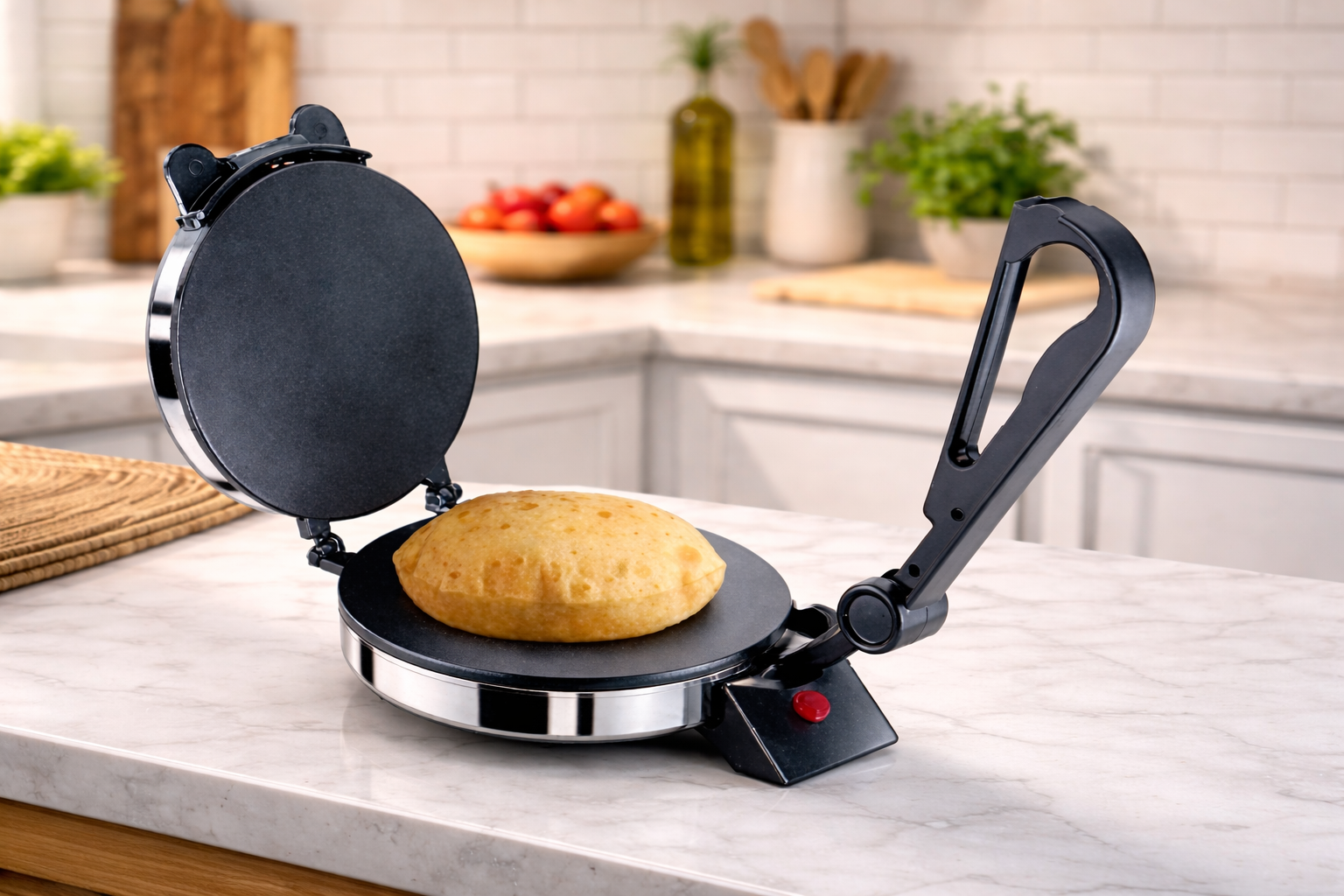
Electric roti maker problems in Indian kitchens are rarely explained honestly before purchase.Electric roti makers attract Indian households for one simple reason rotis are cooked every day, often multiple times a day, and the process is tiring. Rolling dough, managing flame heat, flipping rotis, and standing in the kitchen repeatedly feels exhausting, especially for working families and nuclear households. An electric roti maker promises relief from this routine. Press, close, wait and a round roti appears. At least, that’s how it’s shown.
But the reality inside Indian kitchens is very different. Many buyers either stop using their roti maker within months or feel disappointed after the initial excitement fades. Rotis turn hard, uneven, or dry. The machine sits unused in a corner while the traditional tawa comes back into daily use. This gap between expectation and reality is why electric roti makers have a strange reputation in India popular, yet mistrusted.
This article exists because most content around roti makers focuses on brands and prices, not on why they fail in real Indian cooking conditions. Understanding these problems matters because buying a roti maker isn’t just about money. It affects daily cooking rhythm, food quality, and long-term kitchen habits. When expectations are set incorrectly, even a decent appliance feels useless.
Why Electric Roti Makers Look Simple but Fail in Real Kitchens
Electric roti makers are marketed as plug-and-play appliances. The demonstration videos show perfect rotis made effortlessly within seconds. What is rarely explained is that these demonstrations assume ideal dough, ideal moisture, ideal wheat quality, and a learning curve that most Indian buyers are never told about.
Indian rotis are not standardized. Atta varies from household to household. Some families use freshly ground chakki atta, others use packaged flour, and many mix different brands. Water absorption changes with weather, wheat type, and grinding method. A roti maker does not adapt to these variations automatically. It behaves consistently, while Indian dough does not.This mismatch is the root of most problems. A traditional tawa allows micro-adjustments. You feel the dough, sense the heat, and react instinctively. A roti maker removes that feedback loop. If the input is slightly off, the output suffers, and the machine gets blamed.
Similar confusion exists with other electric kitchen appliances that look simple on paper but behave differently in Indian homes.
The Core Reason of Electric Roti Makers Struggle in Indian Kitchens
The most common complaint from Indian users is hard rotis. Many assume the roti maker overheats or lacks power. In reality, hardness usually comes from dough hydration and resting, not from temperature alone.
Roti makers require softer dough than hand-rolled rotis. Most Indian cooks prepare dough firm enough to roll easily. That dough works perfectly on a tawa but performs poorly in a pressing mechanism. When pressed between heated plates, firm dough loses moisture quickly, resulting in stiff, dry rotis.
Another factor is resting time. Dough that hasn’t rested adequately does not relax its gluten structure. On a tawa, repeated flipping compensates for this. In a roti maker, there is no such correction. The machine exposes the weakness instantly.
This is why some users get soft rotis while others don’t, even using the same model. The difference lies in preparation, not hardware.
Why Indian Wheat Atta Behaves Differently in Roti Makers
Indian wheat is diverse. North Indian wheat behaves differently from central or western Indian wheat. Chakki-ground atta absorbs water unevenly compared to factory-milled flour. Seasonal humidity affects dough consistency significantly.
Electric roti makers are designed with a fixed heat curve. They cannot adapt dynamically to these variations. This rigidity is not a flaw; it is a limitation of automation. Traditional cooking methods evolved precisely because they allow adaptation.
Many buyers expect the roti maker to “adjust automatically.” That expectation is unrealistic. The appliance assumes you will adjust the dough to suit the machine, not the other way around. This is rarely communicated clearly at the time of purchase.
Thickness, Pressure, and Timing: Where Most Users Go Wrong
Pressing pressure plays a crucial role in roti quality.Too much pressure flattens the dough excessively, forcing moisture out too quickly. Too little pressure creates uneven thickness, leading to partial cooking.
Timing matters equally. Leaving the roti inside the press longer does not make it softer; it makes it drier.Traditional cooking intuition often fails here because roti makers cook faster than expected, especially after they fully heat up.
This creates a false impression that the appliance is inconsistent. In reality, it is consistent,but unforgiving. It rewards precision and punishes habit-based cooking.
Why This Matters for Indian Buyers Today
Electric roti makers are not cheap impulse purchases anymore. Prices have increased, and expectations are higher. For urban households trying to save time without compromising daily food quality, repeated disappointment leads to wasted money and frustration.Understanding the real limitations before buying prevents regret. It also helps buyers decide whether this appliance fits their cooking style at all. For some households, it genuinely improves routine. For others, it creates friction instead of convenience.
The long-term implication is important. As Indian kitchens adopt more electric appliances, expectations around automation will rise. Appliances that don’t respect Indian cooking realities will continue to face rejection, no matter how aggressively they are marketed.
Common Electric Roti Maker Complaints and What They Actually Mean
When people complain about electric roti makers, the complaints usually sound emotional. Users say the machine is useless, overhyped, or unsuitable for Indian kitchens. But when you break these complaints down carefully, patterns emerge. Most issues fall into a few predictable categories that are rarely explained honestly before purchase.
Uneven cooking complaints:
One frequent complaint is uneven cooking. Rotis appear pale in some areas and overcooked in others. This is often blamed on faulty heating plates, but the real reason is uneven dough distribution during pressing. If the dough ball is not centered properly or if its moisture is inconsistent, heat transfer becomes uneven. Unlike a tawa, the roti maker cannot be adjusted mid-cook.These electric roti maker problems in Indian kitchens are not defects, but design trade-offs.
Puffing and size expectations: Another complaint is that rotis don’t puff. Puffing is not guaranteed in roti makers because puffing depends on steam generation inside the dough. Traditional cooking allows gradual steam buildup through controlled heat. Roti makers cook rapidly and evenly from both sides, reducing the pressure difference needed for puffing. A non-puffed roti is not undercooked, but culturally, many Indian households associate puffing with quality.
Many users also complain about size limitations. Electric roti makers produce rotis of fixed diameter. For families used to larger rotis or varied sizes depending on the meal, this feels restrictive. This is not a defect; it is a design trade-off for automation.
Understanding these complaints correctly helps separate emotional disappointment from functional reality.
Why Electric Roti Makers Work Better for Some Households Than Others
Electric roti makers are not universally bad or good. They are context-dependent appliances. Their success depends heavily on household structure, cooking frequency, and expectations.
In households where rotis are made once or twice a day in small batches, roti makers often perform well. The learning curve is manageable, and the time saved feels meaningful. For working professionals or elderly users who find rolling tiring, the reduction in physical effort matters more than perfect texture.
In contrast, large families that cook multiple batches daily often find roti makers inefficient. The machine needs periodic reheating stability, dough adjustments, and careful handling.Traditional methods scale better for volume cooking. What saves time for two rotis can slow down production for ten.
This is why online reviews appear contradictory. The appliance isn’t inconsistent user contexts are.
The Learning Curve No One Mentions at Purchase Time
Most electric roti makers require a genuine learning phase. This includes understanding dough softness, resting time, pressing duration, and temperature behavior after continuous use. Many buyers expect instant results because the product is marketed as beginner-friendly.
This mismatch between expectation and reality causes early rejection. Appliances that demand adaptation often fail in Indian households because cooking is deeply habitual. If a machine interrupts routine instead of supporting it, it gets sidelined quickly.
Ironically, users who persist beyond the initial failures often report acceptable results. But by that point, many buyers have already decided the product is a mistake. This is a psychological failure more than a technical one.
Is an Electric Roti Maker Actually Worth It for Daily Indian Cooking?
Whether an electric roti maker is worth it depends on what you expect it to replace. If you expect it to fully replace traditional roti-making with no compromise, disappointment is likely. If you see it as a helper that reduces effort rather than eliminates skill, the outcome improves.
Electric roti makers do not replicate the tactile control of hands and flame. They standardize output. For households that value consistency over perfection, this trade-off can be acceptable. For those who prioritize traditional texture and puffing, manual methods remain superior.
The question is not whether roti makers work, but whether they align with how your kitchen operates every day.Many households asking whether a roti maker is worth it are also evaluating other electric cooking appliances that promise convenience. In such cases, understanding how appliances like induction cooktops compare in real daily Indian usage helps set realistic expectations before replacing traditional cooking methods.
What Buyers Should Realistically Check Before Purchasing One
Many buyers focus on wattage and brand reputation. While these matter, they are not decisive factors. Plate quality, temperature stability, hinge strength, and ease of cleaning have a bigger impact on long-term satisfaction.
Another overlooked factor is storage. Electric roti makers occupy counter or cabinet space. In compact kitchens, this alone determines whether the appliance stays accessible or gets buried behind other tools.
Buyers should also consider how often they are willing to adjust dough consistency. If you are comfortable modifying your routine slightly, the appliance has a better chance of fitting in.
If you’re still considering an electric roti maker after understanding its limitations, focus less on brand hype and more on build quality, plate heating consistency, and long-term reliability. Models with uneven heating or weak hinges usually lead to disappointment in daily Indian use.
To avoid regret, it’s better to check current user feedback, plate material details, and warranty support before deciding.
The Future of Electric Roti Makers in Indian Kitchens
Electric roti makers sit at an interesting intersection of tradition and automation. As Indian kitchens adopt more electric appliances, expectations around convenience will evolve. However, appliances that ignore cultural cooking realities will continue to struggle.
Future designs may improve adaptability, pressure control, and heat modulation. Until then, electric roti makers will remain niche tools rather than universal solutions.
Their role is likely to stabilize as a supplementary appliance rather than a replacement. Households that understand this will experience fewer regrets.
Final Reality Check Before You Decide
Electric roti makers are not failures, but they are not miracles either. They demand understanding, patience, and realistic expectations. When treated as tools rather than replacements for skill, they perform reasonably. When treated as shortcuts, they disappoint.
The real mistake is buying without understanding how Indian rotis behave, how dough responds to pressure, and how automation changes cooking dynamics. Awareness, not brand choice, determines satisfaction.