Best Vegetable Chopper for Indian Kitchen (Manual vs Electric): Honest Review
Choosing the best vegetable chopper for Indian kitchen can save a lot of time and effort during daily cooking. From chopping onions and tomatoes to preparing vegetables for curries and sabzi, Indian kitchens require frequent and repetitive cutting.
Many people in India are confused between manual vegetable choppers and electric choppers. While manual choppers are affordable and simple, electric choppers promise faster results with less effort. But which one is actually better for Indian cooking?
In this article, we compare manual vs electric vegetable choppers, explain their advantages and disadvantages, and help people to choose the best vegetable chopper for Indian kitchen based on your cooking needs, family size, and budget.
What Is a Vegetable Chopper and Why It Is Useful in Indian Kitchens?
For daily Indian cooking that involves frequent chopping of onions and vegetables, choosing the right cookware also matters, especially when preparing food on gas or induction stoves.
A vegetable chopper is a kitchen tool designed to cut, slice, or dice vegetables quickly and uniformly. In Indian kitchens, where daily cooking involves chopping onions, tomatoes, green chilies, and other vegetables, a chopper helps reduce preparation time.
Vegetable choppers are especially useful for people who cook multiple meals daily or prepare large quantities of food. They also reduce hand strain and make cooking easier for elderly users or people with joint pain or physical ill.
With rising busy lifestyles, vegetable choppers have become a practical kitchen accessory rather than a luxury item in Indian homes.
Manual vs Electric Vegetable Chopper: Which Is Better for Indian Cooking?
When choosing the best vegetable chopper for Indian kitchen, the biggest confusion is between manual and electric vegetable choppers. Both types serve the same purpose but work very differently, and each suits a different type of household.
Manual vegetable choppers operate using hand pressure or a pull-cord mechanism. They are simple, affordable, and do not require any electricity. For Indian kitchens, manual choppers are commonly used for chopping like onions, tomatoes, green chilies, coriander, potato and soft vegetables. They are easy to clean and ideal for small families or people who cook limited quantities daily in home.
Electric vegetable choppers, on the other hand, use a motor to chop vegetables quickly with minimal effort. They are suitable for people who cook frequently, prepare large meals, or want to save maximum time. Electric choppers handle harder vegetables better and provide more uniform chopping, which is useful for gravies, cutlets, and stuffing preparation.
However, electric choppers are more expensive and require electricity, making them less convenient during power cuts. Manual choppers are slower but more reliable and budget-friendly. In Indian cooking, where chopping requirements vary daily, many households prefer manual choppers for regular use and electric choppers for heavy cooking days.
The better choice depends on your cooking frequency, family size, and comfort level. Understanding these differences helps you choose the best vegetable chopper for Indian kitchen without wasting money.
Manual vs Electric Vegetable Chopper Comparison Table
| Feature | Manual Vegetable Chopper | Electric Vegetable Chopper |
| Power Source | Hand-operated | Electricity |
| Price Range | Low & budget-friendly | Higher than manual |
| Ease of Use | Requires hand effort | Very easy, minimal effort |
| Speed | Moderate | Fast |
| Maintenance | Very low | Moderate |
| Power Cut Usage | Works anytime | Not usable |
| Best For | Small families, daily chopping | Large families, heavy cooking |
| Indian Cooking Suitability | Very good | Very good |
Which Vegetable Chopper Should You Buy for Indian Kitchen?
Choosing the right vegetable chopper for an Indian kitchen really comes down to your daily cooking routine. How often you cook, how much chopping you do every day, and how comfortable you are using kitchen tools all play an important role.
If you live alone, are a student, or usually cook simple meals in small quantities, a manual vegetable chopper is more than enough. It’s affordable, easy to handle, and doesn’t depend on electricity. Manual choppers work perfectly for everyday tasks like chopping onions, tomatoes, green chillies, coriander, and other soft vegetables commonly used in Indian dishes.
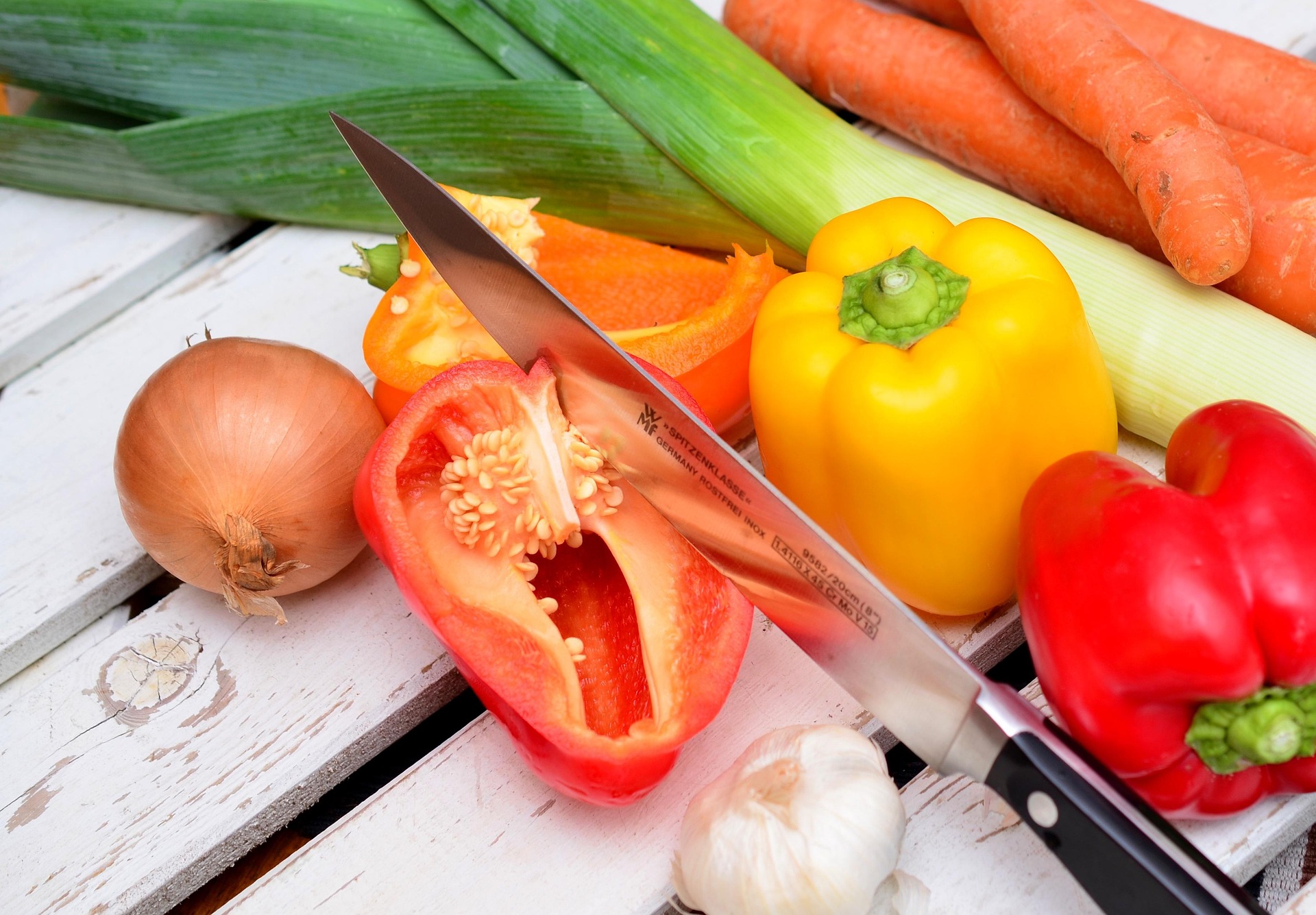
A vegetable chopper for Indian kitchen is especially useful for chopping onions, tomatoes, and green vegetables quickly.
For families that cook two or three meals a day or need to chop large quantities of vegetables regularly, an electric vegetable chopper can be a real time-saver. It reduces effort and speeds up preparation, especially when making gravies, cutlet mixtures, or fillings for parathas and snacks.
Homes with elderly members or people who experience hand pain may also find electric choppers more comfortable because they require very little physical effort. That said, for most Indian households, a good-quality manual vegetable chopper still offers excellent value for money and is practical for daily use.
In the end, understanding your own cooking habits and needs will help you choose the best vegetable chopper for your Indian kitchen without spending more than necessary.
Things to Check Before Buying a Vegetable Chopper for Indian Kitchen
Before buying a vegetable chopper for your kitchen, it is important to check a few practical details that are often ignored during online shopping.
First, look at the blade quality and material. Stainless steel blades are more durable and handle Indian vegetables like onions, potatoes, and carrots better without getting blunt quickly.
Second, check the bowl capacity. Very small bowls may require multiple rounds of chopping, which can become inconvenient for families cooking daily meals. This is important to choose a size that matches your regular cooking quantity.
Ease of cleaning is another important factor. Manual vegetable choppers with detachable parts are easier to wash and dry, while electric choppers may need extra care around the motor area.
Also consider storage space. Indian kitchens often have limited counter or cabinet space, so compact and easy-to-store choppers are more practical.
Finally, before buy check user reviews to understand real-life performance, especially for chopping onions and handling moisture. Paying attention to these points helps you avoid common mistakes and choose a vegetable chopper that suits your Indian kitchen perfectly.
Frequently Asked Questions (FAQs)
1. Is a manual vegetable chopper good enough for Indian cooking?
Yes, a manual vegetable chopper is good enough for most Indian cooking needs. It works well for chopping onions, tomatoes, green chillies, coriander, and other soft vegetables used daily in Indian kitchens.
2. Can electric vegetable choppers handle hard vegetables?
Electric vegetable choppers can handle harder vegetables like carrots, beetroot, and potatoes more easily than manual choppers. However, very large or fibrous vegetables may still need to be cut into smaller pieces first.
3. Does a vegetable chopper realiy reduce cooking time?
Yes, a vegetable chopper significantly reduces preparation time, especially when cooking multiple dishes or chopping vegetables in large quantities.
4. Are vegetable choppers safe to use in kitchen?
Vegetable choppers are generally safe when used properly. Always handle blades carefully, ensure lids are locked correctly, and keep them out of reach of children.
5. Which is better for Indian homes: manual or electric vegetable chopper?
For most Indian homes, a manual vegetable chopper offers better value for money and daily convenience. Electric choppers are better suited for large families or heavy cooking needs.
Choosing the right vegetable chopper for Indian kitchen depends on your cooking frequency and family size.
How This Fits Into Daily Indian Cooking
A vegetable chopper is useful only when it fits into everyday cooking habits.
For smaller families or regular sabzi preparation, a manual chopper usually does the job and stays easier to maintain over time.
Electric choppers start making sense when cooking quantities increase or when hand effort becomes a concern.
The better choice is rarely about speed or extra features.
What matters more is how often you will use it and how easily it can be cleaned and stored.
When a kitchen tool saves time without adding extra work later, that’s when it earns a permanent place.