Non Stick Pan vs Stainless Steel for Indian Cooking: Which Is Better?
Walk into any Indian kitchen and you’ll usually find more than one type of pan.
One is the non-stick pan that comes out for eggs, dosa, or quick cooking. The other is the stainless steel pan that handles dal, sabzi, tadka, and anything cooked on high flame.
Over time, this creates a simple but confusing question:
Which one is actually better for Indian cooking?
Some people say non-stick is easier and healthier because it needs less oil. Others trust stainless steel because it feels solid, long-lasting, and safer. Both sides have valid points, and that’s where the confusion starts.
The truth is, Indian cooking is not one single style. What works perfectly for omelettes may fail badly for curry. What feels durable for tadka may feel frustrating for beginners.
This article looks at non-stick pans and stainless steel cookware the way they are actually used in Indian homes, not the way they are described on boxes or websites. By the end, you’ll know which one suits your cooking habits better, and why many homes end up using both.
What Is a Non Stick Pan?
A non-stick pan is usually the first pan many people buy when they start cooking on their own. Not because it’s fancy, but because it feels forgiving.
At its core, a non-stick pan is an aluminium pan with a smooth coating on top. That coating is what stops food from sticking. Most people don’t care what it’s called. They care that eggs don’t tear, dosa spreads easily, and cleaning doesn’t take forever.
In Indian kitchens, non-stick pans are mostly used for quick, low-stress cooking. Things like omelettes in the morning, light sabzi, pancakes, cheela, or reheating leftover food. You don’t need much oil, and even if your heat control isn’t perfect, food usually doesn’t stick badly.
That’s why beginners like it.
But here’s the part people often learn late.
A non-stick pan is not a tough pan.
It doesn’t like high flame.
It doesn’t like metal spoons.
It doesn’t like being forgotten on the stove.
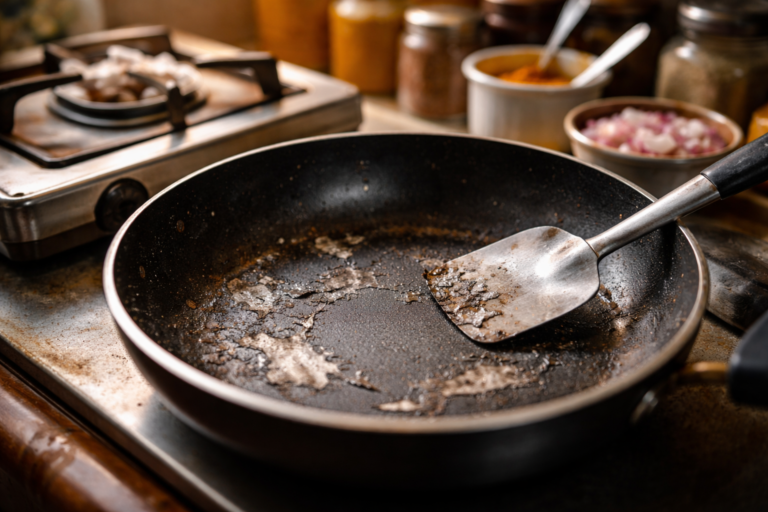
If you use it gently, it behaves nicely. If you use it the same way you use steel, it starts showing problems. The coating gets dull, food slowly begins to stick, and people start saying “non-stick is useless”.
In reality, it’s not useless. It’s just limited.
Modern non-stick pans sold by known brands in India are usually PFOA-free, which means they are safer than older versions. But safety and performance still depend more on how you use the pan, not just what the label says.
Think of a non-stick pan as a convenience tool.
It’s there to make some cooking easier, not to handle everything.
What Is Stainless Steel Cookware?
Stainless steel cookware is what most Indian homes grow up with. It’s usually the pan your mother or grandmother trusts without thinking twice.
Unlike non-stick, stainless steel has no coating at all. It’s just metal. That’s why it feels solid, heavy, and long-lasting. You can keep it on high flame, use metal spoons, scrape the bottom, and it still doesn’t complain.
This is the main reason people trust stainless steel.
In Indian cooking, stainless steel is used for things that need heat and patience. Dal, curries, sabzi with tadka, boiling, sautéing, even frying. It can handle all of this easily. High flame doesn’t scare it, and neither does long cooking time.
But here’s the part that many people don’t admit openly.
Stainless steel is not beginner-friendly.
If you don’t know how to control heat or oil, food sticks badly. Eggs tear, vegetables burn, and cleaning becomes frustrating. This is why many people say, “Steel pan is bad” when the real issue is technique.
Stainless steel needs a bit of understanding. You need to heat the pan properly, add oil at the right time, and let the food cook before trying to move it. Once you learn this, food stops sticking and cooking feels smooth. But that learning curve is real.
Another thing people notice is oil usage. Compared to non-stick, stainless steel usually needs more oil to prevent sticking. For some people, this matters. For others, it doesn’t.
So stainless steel cookware is not about convenience. It’s about control and durability.
If you cook Indian food daily, especially on high flame, stainless steel slowly becomes the pan you rely on most. It doesn’t wear out easily, and you don’t worry about coating damage or replacement every few years.
Think of stainless steel as the workhorse of the kitchen.
It demands a bit of skill, but it gives long-term reliability.
Non Stick Pan vs Stainless Steel: Cooking Performance
This is where the real difference shows up, especially in Indian cooking.
With a non-stick pan, cooking feels easier from the start. Eggs don’t stick, dosa batter spreads smoothly, and even if you use less oil, food usually behaves well. For quick meals or when you’re tired, this convenience matters a lot.
But when the heat goes up, things change.
Indian cooking often needs high flame. Think tadka, frying onions till brown, or reducing gravy. Non-stick pans don’t enjoy this kind of heat. You have to keep the flame controlled, or the pan starts suffering. Food may cook unevenly, and over time, the coating loses its smoothness.
Stainless steel is the opposite.
High flame doesn’t bother it. You can sauté onions till they turn deep brown, make dal tadka, or cook thick gravies without worrying about damage. Heat spreads more steadily, especially in heavier steel pans, and the pan feels stable even during long cooking.
But here’s the trade-off.
Stainless steel demands attention. If you rush things, food sticks. If the pan is not hot enough or oil is added too late, vegetables burn and eggs tear. Non-stick forgives mistakes. Stainless steel does not.
Another difference is control. Stainless steel gives better control over browning and texture once you get used to it. You can actually see and feel how food cooks. Non-stick smooths things out, but sometimes at the cost of flavour development.
So in daily Indian cooking:
• Non-stick works better for eggs, dosa, cheela, pancakes, and light sabzi
• Stainless steel works better for dal, curries, tadka, stir-frying, and high-heat cooking
This is why many Indian kitchens keep both. One pan for ease, one pan for heavy lifting.
Health and Safety: Non-Stick vs Stainless Steel
This is where most arguments start, and honestly, where most confusion also comes from.
People usually say stainless steel is “100% safe” and non-stick is “dangerous”. The reality is not that simple.
Let’s start with non-stick.
Modern non-stick pans sold by known brands in India are PFOA-free. When used the way they are meant to be used, they are considered safe for everyday cooking. Problems usually come from misuse, not from normal cooking. High flame, heating the pan empty, scratching it with metal spoons, or continuing to use it even after the coating starts peeling. That’s when people get worried.
In normal use, like cooking eggs, light sabzi, or reheating food on low to medium flame, non-stick pans don’t suddenly release anything harmful. If they did, half of Indian kitchens would be in trouble by now.
The real rule with non-stick is simple. Once the coating is badly damaged or starts peeling, stop using it. Non-stick pans are not lifetime utensils. They are meant to be replaced after a few years of use.
Now stainless steel.
Stainless steel feels safer because there is no coating to worry about. You can heat it hard, scrape it, and it still looks the same. That gives peace of mind, especially for people who cook daily on high flame.
But stainless steel is not “care-free” either. If food sticks and burns, people often use extra oil or cook on very high flame, which is also not ideal. Still, from a long-term durability point of view, steel handles rough use much better.
So if we’re being honest:
• Non-stick is safe when used gently and replaced on time
• Stainless steel is safer for rough, high-heat, long-term use
This is why many Indian homes use non-stick for convenience and steel for heavy cooking. Safety comes from how you use the pan, not just what it’s made of.
Non Stick Pan vs Stainless Steel: Maintenance & Cleaning
This is where most people silently choose sides without even realising it.
With a non-stick pan, life feels easier. Food usually doesn’t stick, so cleaning is quick. A soft sponge, a little dishwash liquid, and the pan is clean in seconds. On busy days, this feels like a blessing.
But non-stick also comes with rules. You can’t scrub hard. You can’t use steel scrubbers. You have to wait for the pan to cool before washing. If you forget and wash it hot, the coating slowly weakens. If someone at home uses a metal spoon “just once”, the pan takes a hit.
So while cleaning is easy, care is constant.
Stainless steel is the opposite.
Cleaning steel can be irritating when food sticks. Burnt bits, black marks, soaking overnight. Everyone has been there. On those days, steel feels like extra work.
But stainless steel doesn’t demand gentle treatment. You can scrub it hard, use steel scrubbers, and not worry about damaging anything. If food burns, you clean it and move on. No long-term damage.
Another daily issue is storage. Non-stick pans don’t like stacking. If you place other utensils on them, the coating scratches. Stainless steel doesn’t care. You can stack freely.
So in daily life:
• Non-stick saves time but needs careful handling
• Stainless steel needs effort but tolerates rough use
This is why in many homes, non-stick pans slowly get pushed to the side after the coating starts showing wear, while steel pans stay in use for years.
Neither is perfect. One saves effort today. The other saves worry long-term.
Which Is Better for Indian Cooking ?
If someone asks, “Which is better, non-stick or stainless steel?”, the honest answer is: it depends on how and what you cook.
If your cooking is mostly quick and simple, non-stick feels easier. Eggs, omelettes, pancakes, cheela, light sabzi, reheating food. These things don’t need high flame or long cooking time. For this kind of everyday convenience, non-stick works well and saves effort.
But if you cook proper Indian meals daily, stainless steel slowly becomes more reliable. Dal, curries, tadka, sabzi that needs browning, frying onions till golden. These tasks involve heat and time, and steel handles them without complaining.
Another big factor is patience.
Non-stick suits people who want things to work quickly, even if heat control is not perfect. Stainless steel suits people who are okay learning a little technique and adjusting oil and heat.
There’s also the matter of replacement. Non-stick pans need to be replaced every few years once the coating wears out. Stainless steel pans can last decades if cared for.
This is why many Indian homes don’t actually choose one over the other. They keep both. One pan for convenience, one pan for heavy cooking.
FAQs
Q1. Which is healthier, non stick or stainless steel?
Both are safe when used properly. Stainless steel is more durable, while non stick is easier for low-oil cooking.
Q2. Can non stick pans be used daily?
Yes, non stick pans can be used daily if cooked on low to medium heat and handled carefully.
Q3. Which cookware is better for Indian curries?
Stainless steel cookware is usually better for curries and high-heat cooking.
What Most Indian Homes Finally End Up Doing
If you look closely at how Indian kitchens actually work, you’ll notice something simple.
Most homes don’t fully commit to either non-stick or stainless steel. They quietly use both.
The stainless steel pan handles the serious work. Dal simmering for a long time, sabzi that needs proper browning, tadka on high flame, curries that need patience. It may need a bit more oil and cleaning effort, but it feels dependable.
The non-stick pan comes out when cooking needs to be quick and stress-free. Eggs in the morning, cheela, dosa, reheating leftovers, or days when you don’t want to scrub a pan after cooking. It saves time and effort, as long as it’s used gently.
Problems usually start only when expectations get mixed up. When a non-stick pan is treated like steel, it wears out fast. When stainless steel is expected to behave like non-stick, people get frustrated with sticking.
Once you accept that each pan has its role, cooking becomes easier and less annoying.